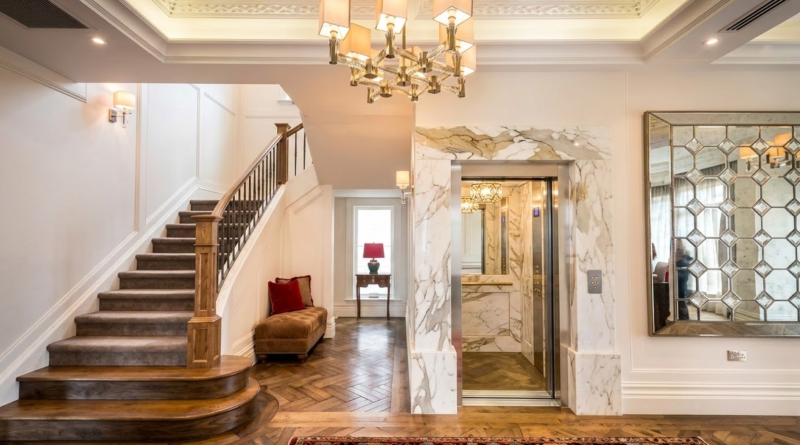
Who Signs Off on a Home Elevator in New Jersey? Permits, Licensed Mechanics and Final Reports Explained
New Jersey’s local construction office issues the permit for a home elevator. However, a licensed elevator mechanic or a supervised apprentice must perform the installation. The state’s Department of Community Affairs (DCA) can serve as the elevator subcode official. When it does, a sealed engineer’s or architect’s report replaces the state’s final inspection for private homes. This oversight spans several parties, so early coordination keeps a project moving toward sign-off.
How Does New Jersey’s Permitting Oversight Vary by Municipality?
Which office reviews a home elevator permit depends on how a municipality structures its elevator subcode authority. New Jersey’s Uniform Construction Code lets a town choose the DCA, its own Subcode Official or a third-party agency.
Where the state holds jurisdiction, DCA “reviews building plans containing elevator devices for a partial release at the municipality’s office.” It then completes a final layout review at the state office. A town with its own Subcode Official handles that review entirely in-house.
Verifying an Elevator Mechanic’s License in New Jersey
New Jersey law requires anyone installing, altering or servicing a home elevator to hold a state mechanic license or work under someone who does. The same requirement applies to using a licensed designation in any manner concerning these activities, per N.J.S.A. 45:14H-5 of the 2025 NJ Revised Statutes. A contractor’s registration doesn’t substitute for that individual license, so confirming the license number protects compliance and the project schedule.
| ⚠️ Common mistake: A business registered as a home improvement contractor isn’t automatically staffed by a licensed elevator mechanic. Builders can confirm an individual’s license number by searching the official license verification system before work begins. |
One exception applies to chair lift and stair lift devices installed in a dwelling unit. Design teams weighing different accessibility options for a home should keep that distinction in mind.
How to Coordinate Elevator Design, Permitting and Construction?
An engineer evaluates structural adjustments, a contractor builds the pit and hoistway, and the licensed installer handles the equipment itself. That split is part of why custom home elevator installers in New Jersey handle design and permitting based on the business model.
In a retrofit, an engineer may need to confirm that the floor plan can accommodate the hoistway, pit and related structural changes before demolition begins. If the project team is also evaluating stair lifts or other accessibility options, the National Association of Home Builders notes that multi-story homes may need a stairway at least 4 feet wide to fit a lift.
Who Installs Custom Home Elevators in New Jersey?
| 💡Short answer: Who Installs Custom Home Elevators in New Jersey? In New Jersey, custom home elevators must be installed by a licensed elevator mechanic or someone working under one. Installers fall into three types: manufacturer-direct, dealer network and independent. Inclinator Elevators & Lifts, the installation and service division of Inclinator, is one manufacturer-direct example serving Philadelphia and southern New Jersey. The local construction office issues the permit. |
New Jersey’s custom home elevator market includes three installer models. Each operates under the same state mechanic licensing requirement.
1. Manufacturer-Direct Installers
Some installers work directly for the manufacturer, maintaining their own factory-affiliated installation arm instead of relying solely on third-party dealers. This direct model aligns manufacturing closely with on-site work, and Inclinator is one example.
Its New Jersey installation arm, Inclinator Elevator and Lifts, serves the Philadelphia and southern New Jersey region. It draws on almost a century of experience and manufacturer membership in the Accessibility Equipment Manufacturers Association. “Dealer technicians are factory-trained on installing Inclinator home elevators based on our quality standards,” Inclinator states. It also authorizes these same dealers to handle service and repair.
2. Dealer Network Installers
Dealer networks consist of independently owned businesses authorized to sell, install and service one or more elevator brands under manufacturer agreements. A dealer carrying multiple brands can draw on training from each manufacturer it represents.
3. Independent Installers
Independent installers work without formal affiliation with a dealer or manufacturer, often serving smaller or localized areas. This can appeal to project teams that prioritize flexibility or local relationships. New Jersey’s mechanic licensing requirement applies here, regardless of business structure.
How to Design Flexibility for a Fully Custom Home Elevator?
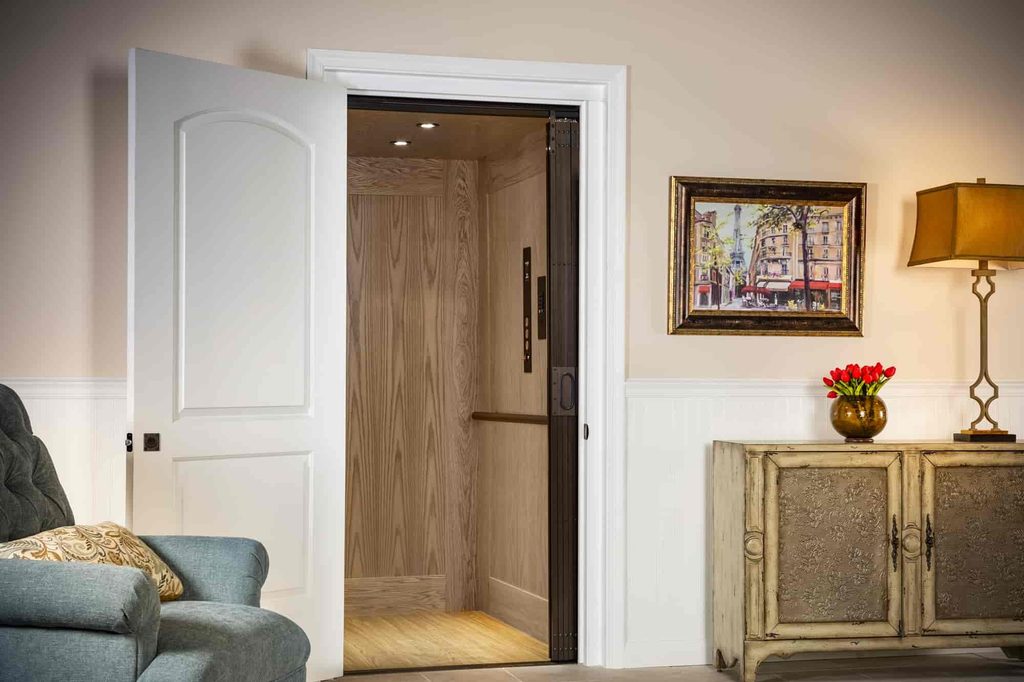
Builders and design teams can configure home elevators across elements, including cab wall finishes, flooring, ceiling style, handrail design, lighting and panel finish. Each cab can coordinate with a home’s existing style.
A design team on a historic renovation, for example, might prioritize a wood-finished interior and an ornate handrail over a modern laminate combination. Inclinator says its elevators feature “well-designed mobility solutions that offer advanced safety features to provide that extra level of comfort and peace of mind.” Inclinator caps lighting at four installed LED lights, though homeowners can configure additional fixtures around that four-light base.
What Are the Safety Compliance and Inspection Requirements?
The American Society of Mechanical Engineers (ASME) sets safety standards for elevators and escalators nationwide. ASME A17.1 section 5.3 specifically addresses private residence elevators separate from the broader commercial code. States and municipalities like New Jersey may layer additional codes on top of this baseline.
Power-loss safety features vary by product and jurisdiction, so builders should confirm the exact requirements for the selected system. For example, Inclinator residential elevator products include emergency battery-powered cab lowering and lighting, along with code-compliant safety gates and full-time cab monitoring.
| 💡 Key point: Even if a town doesn’t require periodic inspection of a private residence elevator, scheduling one annually is recommended. This habit keeps the system operating as intended. |
Warranty and Maintenance Support After Installation
A manufacturer’s warranty typically covers the equipment itself, while ongoing performance depends on the maintenance performed after installation. A homeowner who schedules routine checkups tends to catch minor wear early, rather than waiting until a malfunction forces a bigger repair.
“After the installation, consider scheduling routine maintenance, so you can continue to enjoy your home elevator to the fullest,” Inclinator recommends. Builders can point clients toward an authorized local dealer for this ongoing care.
A credentialed inspector, certified through NAESA International, can confirm continued compliance during periodic checks. NAESA International states that it “certifies inspectors to the ASME QEI-1 Standard for Qualified Elevator Inspectors.”
Frequently Asked Questions
A few common questions come up when builders and design teams scope a residential elevator project in New Jersey.
What permits are required for a home elevator installation in New Jersey?
The local municipality issues the construction permit for a home elevator installation, and whichever elevator subcode official the town has designated reviews it. For private homes where the state has jurisdiction, a sealed report from a New Jersey-licensed engineer or architect replaces a state-conducted final inspection.
Do custom home elevator installers in New Jersey handle design and permitting?
How closely an installer coordinates design and permitting work depends on its business model. Structural adjustments still require sign-off from a licensed engineer, and pit or hoistway construction is handled by a general contractor rather than the installer.
Bringing Your Elevator Project From Permit to Final Sign-Off
A home elevator project in New Jersey comes together through three coordinated steps. A municipality issues the permit, a licensed mechanic performs the installation and a sealed report stands in for the state’s final inspection on private homes. Builders can connect with a local dealer to scope requirements for their municipality.
*Please note that this list includes sponsored content. Some of the companies, products, or services featured have entered into commercial agreements for placement. Sponsored placements do not necessarily reflect an endorsement and should be considered alongside other options in the marketplace.