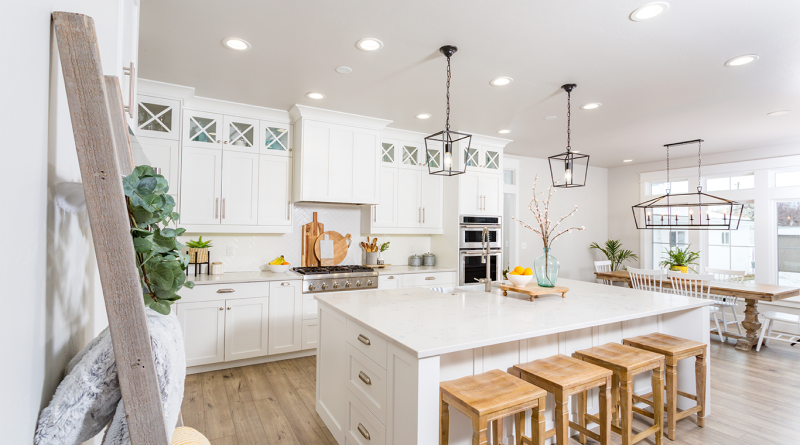
What the best kitchen design gets right about modern living
Subscribe to our free newsletter today to keep up to date with the latest homebuilding news.
The modern kitchen has become one of the most demanding rooms in residential design. It has to handle food preparation, storage, entertaining, family routines and increasingly hybrid uses without feeling like a collection of appliances and cabinets. At the same time, homeowners expect the room to carry the same architectural and decorative weight as a living room, particularly when kitchens sit within open-plan spaces where every finish remains visible throughout the day.
That pressure is changing what a high-end kitchen looks like. A polished white room with a marble island may still appeal to some homeowners, but designers are increasingly working with stronger color, richer natural materials, historic references and layouts built around specific household habits. Luxury is becoming less dependent on a recognizable visual formula and more closely tied to how precisely a kitchen responds to the people using it.
The change is visible across recent designer projects collected by Elle Decor, where coral cabinetry, black-painted millwork, green stone, warm oak and heavily veined marble appear alongside preserved architectural details and compact layouts. What connects these kitchens is not a single aesthetic but a willingness to make permanent design decisions that give each room a distinct identity.
Luxury kitchen design is moving beyond the safe neutral formula
For years, neutral kitchens offered homeowners an appealing promise. White cabinetry, pale stone and restrained hardware could make a space feel larger, cleaner and easier to sell. That logic remains useful, particularly in homes where longevity and resale value are priorities, but the most ambitious designer kitchens are beginning to treat color as an architectural material rather than an accessory that can be changed later.
Designer Eddie Lee, for example, covered cabinetry, trim and a door in a warm coral tone in a Bedford, New York, home, creating a kitchen where color defines the room rather than simply punctuating it. Sheila Bridges took a different route in a Vermont residence, using leafy green cabinetry informed by the state’s distinctive license plate. Michael Ellison moved toward the opposite end of the spectrum in a Manhattan loft, specifying near-black cabinetry that gives the kitchen a deliberately darker character.
These projects illustrate a larger change in how designers approach personalization. Color is no longer restricted to bar stools, pendant lights or objects that can be replaced without disrupting the architecture. When the cabinetry itself carries the color, the kitchen becomes harder to separate from the personality of the property and its owners.
That specificity can make an interior feel more considered, particularly in a market where similar cabinet profiles, hardware finishes and stone patterns have been repeated across thousands of renovations. A strong color choice introduces risk, but it can also prevent an expensive kitchen from feeling anonymous. The more useful question for a homeowner may therefore be less about whether a color is currently fashionable and more about whether it belongs convincingly within the architecture, light and daily life of the house.
Materials are doing more of the visual work
The same move toward specificity is shaping material choices. Instead of relying on numerous decorative details, many designers are using a smaller number of visually assertive surfaces that establish the room’s character through color, veining, texture and natural variation.
In one project, Steven Gambrel used Paonazzo marble across a substantial island designed to accommodate a family of six, allowing the stone’s gold, violet and caramel veining to become a central decorative feature. Leah Ring paired white oak cabinetry with deep red Rojo Alicante marble in a Midwestern home, creating contrast without filling the kitchen with additional colors or finishes. Hugo Toro pushed the idea considerably further in a Paris apartment by carrying graphic marble across counters, floors and walls before introducing red lacquer cabinetry.
Natural materials can be expensive, harder to replace and more demanding to maintain than standardized manufactured surfaces, but those limitations are partly responsible for their appeal. Variation, patina and visible craftsmanship give a kitchen a sense of permanence that is difficult to reproduce with surfaces designed for perfect uniformity.
Homeowners appear willing to invest heavily in that material experience. Houzz’s recent kitchen research found that countertops remain one of the most commonly upgraded elements during renovations, with appearance, durability and ease of cleaning playing major roles in selection. In higher-budget projects, those decisions can influence not only how the room looks when construction is completed but how convincingly it ages over the following decade.
A high-end kitchen does not necessarily require rare stone or elaborate finishes across every surface. The more useful lesson from current designer projects is restraint in placement. A distinctive island, custom range hood, unusual cabinet finish or heavily figured countertop can carry much of the visual weight when the surrounding materials remain quieter.
The strongest kitchens are designed around behavior, not photographs
Visual impact may attract attention, but the success of a kitchen is usually determined by decisions that are much less visible. Circulation, storage, sightlines, seating, appliance placement and the distance between work zones influence the room every day, long after the novelty of a particular finish has worn off.
Some of the most persuasive designer kitchens start with those patterns of use. In a Victorian English country manor, Linda Boronkay created a kitchen that accommodates more than cooking, incorporating a communal table, reading area, fireside seating and direct access to the pool. Gambrel’s oversized island was developed partly around the needs of a six-person family, making its dimensions a functional response rather than simply a visual gesture.
Smaller kitchens can demonstrate the same principle with less space. A Provincetown cottage featured by Elle Decor uses a narrow galley configuration informed by the efficiency of ship interiors, where limited square footage demands disciplined placement. In another project, Amy Kehoe reoriented an island, lightened the flooring and introduced large glazed openings to improve views, daylight and movement through the room.
This focus on usability aligns with broader renovation research. Houzz’s 2026 US kitchen study found that dissatisfaction with poor functionality remains a major reason homeowners renovate, sitting close to dissatisfaction with an outdated style. NKBA research has also pointed toward flexible spaces, layered lighting, concealed functions and personalized layouts as important directions for kitchen design.
The commercial implications are significant because kitchen renovation continues to represent a substantial market even as parts of the residential construction sector face pressure. NKBA’s 2026 outlook places the US kitchen and bath market near $228 billion and forecasts stronger growth for professionally led remodeling than for new construction, suggesting that existing homeowners remain willing to invest in substantial upgrades when those projects solve meaningful problems.
The result is a broader definition of luxury. A kitchen can contain expensive appliances and exceptional stone yet still perform poorly if the layout ignores how the household cooks, gathers and moves. By contrast, a smaller or more restrained room can feel highly resolved when materials, architecture and daily behavior have been considered together.
That distinction helps explain why some of the most memorable kitchens now include restored cabinetry, vintage furniture, unusual colors or deliberately imperfect natural materials. Their appeal comes from specificity rather than excess. As designers move away from a universal formula, the kitchen is becoming less like a standardized showroom and more like a room that could only belong to one particular house.
Source:
Elle Decor