What makes a home feel happy. By Erin Hackett Nordholt
When people ask me how I define a ‘happy space’, I always come back to one thing: it’s a home that brings you joy simply by being in it. Not because it’s perfect, expensive, or trend-forward, but because it feels intentional, personal, and grounding.
That definition really took shape when my husband and I bought our first home – a 1950s cottage ranch that had much of its original character stripped away by previous owners. At the time, we were both still building our careers, so we didn’t have an endless renovation budget. We had to take a slower, more thoughtful approach to updating it and prioritize what mattered most. One of our earliest major investments was in the backyard landscaping, which meant the interiors had to wait.
In hindsight, that slower process taught me everything.
It pushed me to get creative, to embrace vintage decor, and to appreciate the beauty of character and patina. Over time, I built a home piece by piece that genuinely brought me joy every time I looked at it. That experience ultimately became the foundation for Hackett House Studio. Once I understood how profoundly our surroundings can shape how we feel, my passion for interior design grew tenfold.
I also believe a ‘happy space’ looks different depending on where and how you live. As someone born and raised in Ohio, I know firsthand how much the environment outside can affect the atmosphere inside. After the holidays, when the long gray stretch of January, February, and even March sets in, the lack of light and color can have a real impact on your mood.
That’s exactly why I think beautiful, well-appointed interiors matter so much – especially in climates where we spend a significant amount of time indoors. We rely on our homes differently than someone living in a place that feels naturally vibrant year-round. Even something as simple as fresh flowers in the middle of winter can add life, color, and a subtle emotional lift.
When it comes to the ways design most directly influences mood and wellbeing, I’m a firm believer that form and function must work together. One of my strongest personal design philosophies is that you should only live with things you truly love to look at. In my own home, that applies to everything – from furniture and decor to what’s sitting out on the countertop. That doesn’t mean a home has to feel sterile or overly styled. It simply means every item should feel purposeful. When storage is thoughtful and everything has a place, you can clear away the visual noise and make room for the pieces you actually want to see. That edited, intentional environment creates calm in a very real way.
Calm cohesion
Restraint is another principle I return to constantly. I often say that one of the best things you can do in a home is commit to no more than two or three design styles. Today, so many homes feel like ‘Frankenstein houses’ – spaces with no real architectural identity, layered with interiors that feel just as disconnected.
There’s something deeply calming about cohesion. In my own home, I’ve tried to honor both its 1950s cottage ranch roots and subtle mid-century modern elements while still allowing for thoughtful updates. Restraint can be difficult, especially when you love many different styles, but it’s essential if you want a space to feel harmonious.
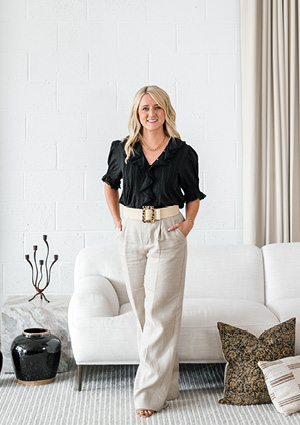
Photo Credit: Natali Folchi of Folchi Creative
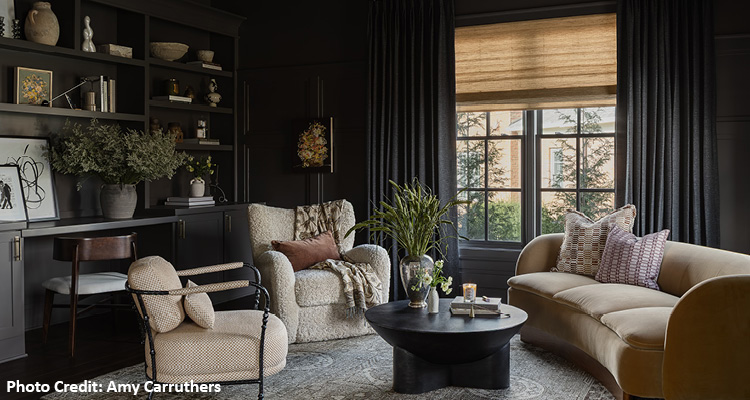
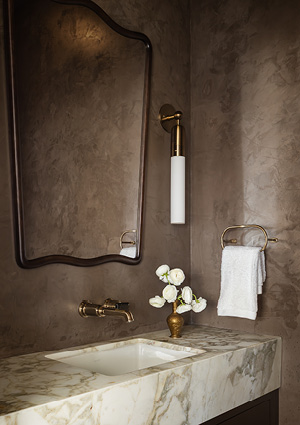
Color, texture, and materiality also play a huge role in how a home feels emotionally. Personally, I tend to gravitate toward neutrals, texture, and natural materials over bold color. Limestone, marble, wood, wool, linen, and stone all have a grounding quality to them.
At Hackett House Studio, we often talk about ‘color, but not colorful’. We may use blues or greens, but usually in a tonal, color-drenched way rather than mixing across the entire color wheel. Nature is always the reference point. Those combinations feel inherently warm and comforting because they already exist around us.
Natural light matters too, but I also believe in being realistic about it. In our work, especially with new builds, we focus less on quantity and more on intentional placement. Privacy, climate, and orientation all matter. Thoughtful window placement can often do more for a space than an entire wall of glass.
And perhaps a bit controversially, I tend to prefer a more closed floor plan. While open-concept homes can be wonderful for entertaining, they can also create a feeling that every room needs to be ‘on’ all the time. I think there’s real value in visual and mental separation; being able to close the door on a messy office or kitchen and fully enjoy another part of the home without distraction.
At the end of the day, creating a happier home doesn’t have to begin with a major renovation. Often, it starts with intention: editing what you display, organizing what you keep, bringing in fresh flowers, or layering in pieces that feel meaningful and full of character.
A joyful home should feel like you – but elevated, edited, and deeply considered. That balance between personality and beauty is where the magic happens.
Erin Hacket Nordholt
www.hackethousestudio.com
Erin Hackett Nordholt is owner and principal designer of Hacket House Studio. A multidisciplinary designer, Erin founded Hackett House Studio on the belief that your surroubdings influence your happiness and tell a story about the person that you are. The aesthetic is simultaneously modern and timeless and considers functionality to be equally as important as form when designing the ideal space. Working with Hackett House Studio means clients will receive transparency and guidance throughout the duration of their project, resulting in a beautiful space and investment.