Todd Glowka Builder combats the custom home sector slowdown by combining timeless design with advanced technology
While much of the custom home building industry across the US has somewhat decelerated, Texas Hill Country is home to a builder busier than ever – just not in the way you might expect. Todd Glowka Builder has taken advantage of the slowdowns within the sector, even though President, Todd Glowka, reveals his company has also seen work ease off. Despite this, Todd believes the business has been blessed due to the increase in larger, more challenging projects it has been undertaking.
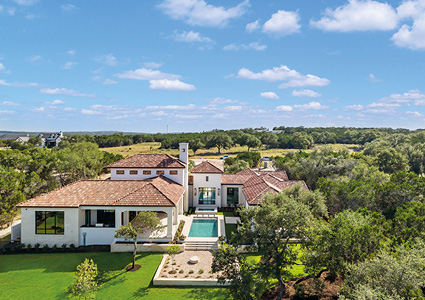
With two locations nestled in the Hill Country region, the firm specializes in estate lots, private ranches, golf course communities and exclusive subdivisions, in what Todd Glowka Builder describes as ‘one of the most beautiful places in Texas.’ Todd tells us more about the current market, the expansive builds he has been taking on and how the slowing of custom home building has actively helped the company grow.
“Recently, we’ve been fortunate enough to have several requests for 25,000-30,000 square foot homes come across our desk,” begins Todd. “There has been an overall decline in work, but we’ve been blessed – I call it ‘blessed but stressed!’ The slowdown has given us more time and enabled us to keep improving our product, particularly our waterproofing techniques, which ultimately enhances the experience for the client.” Labor has also freed up, meaning the business has had more access to subcontractors. “Previously, when we’d sign an 18-month contract, the sheer volume of work and lack of subcontractors often saw the work take up to 20 months,” Todd recalls. “However, we’re now able to finish in 13-14 months, so it’s been a blessing in some ways.”
Timeless design
Todd highlights two standout projects from the past year, including one ultra-modern, flat-roof home. “It’s similar to something you’d see in Miami or California, with lots of steel and glass,” he exclaims. “These are always more difficult builds because there’s no attic, so all our mechanicals are done a little differently.” The second project is a spec home currently in its final stage, with a professional photo shoot already scheduled. With the company averaging one spec home every eight years, this build at Springs of Cordillera Ranch is particularly special and marks a stylistic shift. “For years, we focused on transitional architecture,” explains Todd. “The Hill Country has its own style – the region is lush and green with rolling hills, creeks and rivers. Texas is a huge state with five different geographical regions, and each one feels like a different country. We’re in the part most people desire, and many people want to retire here.
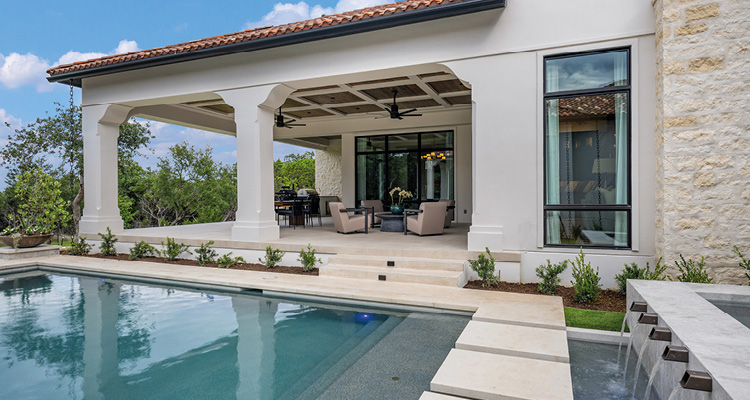
“We’ve produced a lot of transitional architecture over the last four or five years, keeping the Hill Country elements but adding more modern, clean lines, and white walls,” he continues. “This spec home is Santa Barbara style. It looks like Californian architecture with a clay tile roof, but the interior features earth tones with more of a classical, warm look.” This return to timeless architecture is a far cry from the latest fads and something Todd believes will never go out of style. “There are still modern touches like marble counters and marble tile through the master bathroom, but it’s all tied together very well. Numerous clients have requested this style of design because it’s warm and comfortable. You feel like you’re in a warm and inviting home.”
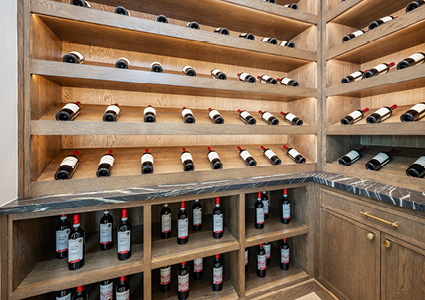
Industry trends go beyond aesthetics; while Hill Country style remains in steady demand, with timeless design being the clear leader, Todd points to a dramatic rise in home technology spending. “Some of our current jobs incorporate over a million dollars’ worth of technology alone. We’re installing 14-foot-wide televisions in games rooms, for instance, or concealed televisions in the ground behind the pool, so you can watch TV from the water, as people tend to want quiet family space rather than big screens in their main living areas. Much of the technology – stereos, music devices, whole-house lighting control, security cameras, automated sliding glass doors – can all be controlled from an app on your phone. Tech is now a bigger line item than cabinets, whereas wine rooms are becoming smaller and less elaborate, which may be tied to a broader drop in alcohol consumption.
“One thing that’s now almost mandatory is the secondary prep kitchen, typically 15 by 20 feet with floor-to-ceiling cabinetry, sitting just behind the main kitchen. It doubles as the pantry, with extra ovens, a microwave, a second dishwasher, extra fridge and freezer space.” Todd notes that around 95 percent of the homes he has under construction include a feature-rich prep kitchen. “Whoever’s cooking can leave everything out in there, prep the meal, then bring it to the island in the main kitchen to serve and entertain, and close the door on the dirty dishes until guests depart!”
Balanced vision
When clients approach Todd Glowka Builder with their plans, the firm has a sure-fire way of balancing that vision with functionality. “When a client first reaches out, we invite them down and walk them through previously built homes,” Todd discloses. “The majority of our clients happily allow us to show their homes, and we read through the new client’s preferences as we go; if someone says they want Hill Country, the last thing I’ll show them is something ultra-modern because that’s on the other end of the architectural spectrum. We narrow it down through conversations and photographs, then pick the homes that best match what they’re after.” Todd also shows the client homes under construction, demonstrating the building science and techniques used in contrast to other builders in the area. “We never build the same home twice – we’ll keep elements a client loves, but we make changes so each design stays bespoke to them,” he notes.
This dedication to unique custom builds sees the company deliberately limiting the number of homes built to protect the exceptional quality. “We just started three new projects and we’re working to sign three more by the end of September – that will likely be all we take on this year,” states Todd. “The rest of 2026 is about continuing to improve our processes and how we approach building science. We aim to stay five to seven years ahead of code, and there are always new materials and processes we look to implement. More specifically, we’re focusing on moving away from spray foam insulation toward more natural insulation products with a higher R-value and lower toxicity. The industry slowdown we were discussing has given us the time to work on that, while we’re still busy enough to keep the business running successfully.”