Thirty years of craftsmanship: how Ranieri & Kerns built a legacy on trust, integrity, and quality
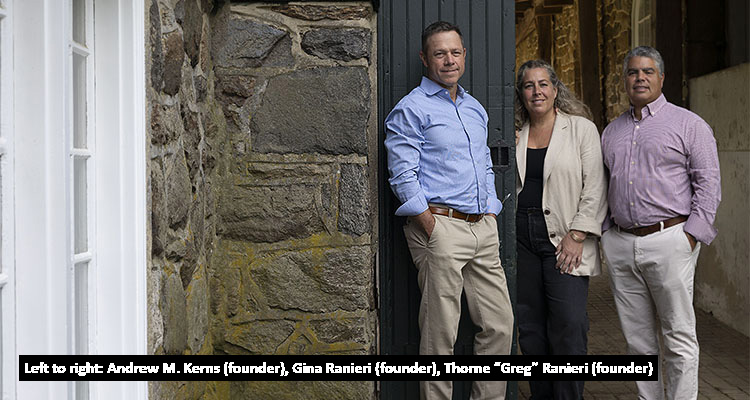
Ranieri & Kerns was established in Pennsylvania in 1996, and three decades on, the company’s approach to construction remains largely unchanged. The business was founded by Thorne ‘Greg’ Ranieri and Andrew Kerns, college classmates who had each spent their early careers post-graduation on opposite sides of the same discipline: one in architecture, the other in custom building.
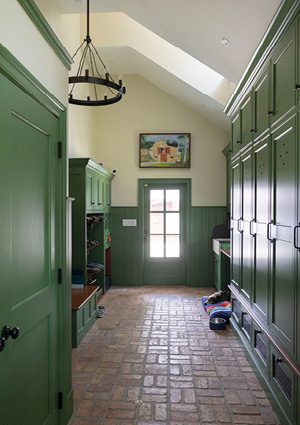
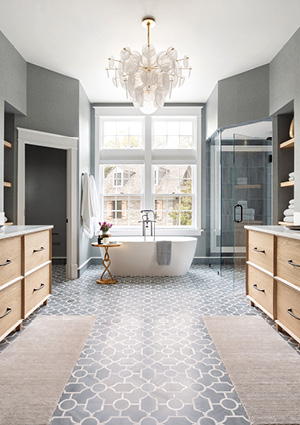
Today, Ranieri & Kerns brings together clients, architects, subcontractors, and suppliers around a shared vision, with clear communication and careful project management at every stage. From bespoke new builds and renovations to complex restorations, the company is focused on delivering spaces that balance beauty, precision, and enduring quality, transforming residential designs into homes that stand the test of time.
Earning trust
Now, to commemorate Ranieri & Kerns’ 30th anniversary, we sit down with Andrew Kerns to dive deeper into the business’ journey thus far. “In the beginning, neither of us left our other jobs; we ran the earliest projects around them, in whatever hours were left before and after the work that was actually paying the bills,” Andrew begins, detailing his and Greg’s early experiences building the business. “What often gets left out of that account is that there were three of us from the start. Greg’s wife, Gina, was a founding partner as well, working behind the scenes on logistics and the finances. She remains a founding partner today and, while she’s since built ventures of her own, she still gives the firm a set portion of her week to make sure the closeness between everyone here never slips.
“What grew the business beyond the three of us wasn’t capital or marketing; it was relationships built with people in the trades who eventually came on as our first full-time employees,” he says. “This business has always run on referrals, so earning that trust with every client, proving we could actually deliver the home they were picturing, was never a secondary concern. It was the whole strategy.”
These early relationships shaped how the business chose to grow. As the firm gained a reputation through referrals and expanded beyond its three founders, it deliberately resisted the pressure to become larger for the sake of scale, choosing instead to preserve the trust, familiarity, and personal involvement that had defined those first years.
Founding fundamentals
“A decision was made at the beginning to stay smaller and more boutique in nature. When the people who founded the company are the same people reviewing drawings, walking sites, and answering calls, the standard they hold isn’t an abstraction handed down through layers of management: it’s simply what we’re willing to put our own name behind,” Andrew elaborates. “People who have worked alongside each other for years develop a shorthand – less explaining, faster judgment, fewer things that fall through the cracks. It’s the same familiarity, really, that clients experience with the firm itself.
“What’s changed most over the years is technology, and yet the fundamentals haven’t moved an inch. Construction is still a people business. You show up, you do what you said you’d do, you solve the problem when it comes up instead of around it, and you stand behind the work once it’s finished. That’s why the work is worth doing.”
Celebrating craftsmanship
Without doubt, the same principles that have carried Ranieri & Kerns to its 30-year milestone will continue to shape the future. As Andrew explains, while the tools and the scope may evolve, the firm’s commitment to craftsmanship, integrity, and personality remains the same.
“What comes next looks a great deal like what came before: the same commitment to craftsmanship, the same structure that keeps the founders close to every project, carried into a slightly wider range of work. This means more restoration, more long-term stewardship relationships, a bit more institutional, perhaps a commission or two that stretches what the firm has taken on before. The intention isn’t to become something different. It’s to keep being exactly this, for another 30 years, without a shorthand standing between the name and the work it represents,” he affirms.
“Thirty years in, what concerns us more than any single project is whether the skills this work depends on will still be there to pass down – whether the next generation sees stonework, timber framing, plasterwork as a craft worth choosing, rather than something that quietly got left behind while everyone else went into work done on a screen,” Andrew says, concluding our conversation. “We’ve built a career on things made by hand, by people who spent years learning to do it well, and none of that continues without someone deciding, early, that it’s worth learning. If there’s a hope we’d want a piece like this to leave a reader with, it isn’t just admiration for a finished house – it’s some regard for the people who still choose to build one properly, and maybe a word of encouragement for whoever is deciding, right now, whether that’s a path worth taking.”
As we stand in 2026, Ranieri & Kerns’ story remains less about growth than about staying true to what made the company worth building in the first place. As the firm looks toward the next 30 years, its greatest legacy will be in ensuring that those values, and the skilled hands behind them, continue to have a place in the future of construction.