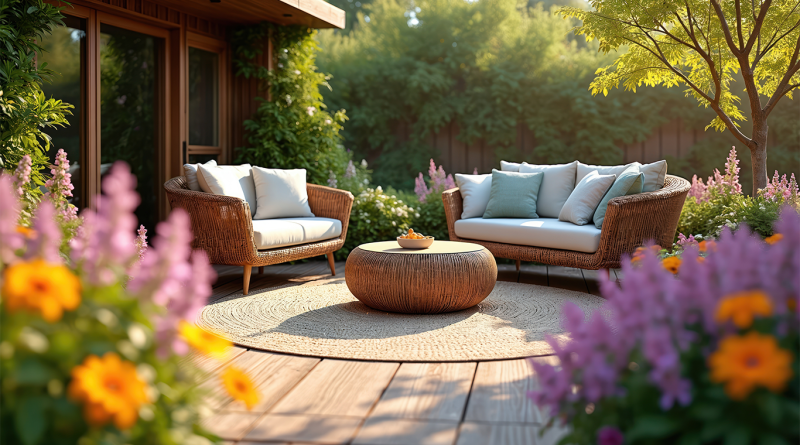
Why outdoor furniture is becoming one of home design’s biggest categories
Subscribe to our free newsletter today to keep up to date with the latest homebuilding news.
Outdoor furniture used to follow a predictable formula: a metal dining table, stackable chairs and cushions that rarely survived more than a few summers. The category existed largely as a seasonal necessity rather than a design statement, practical, durable and often visually disconnected from the rest of the home.
That distinction is disappearing.
Across patios, terraces, rooftops and backyards, homeowners are treating outdoor spaces with the same attention once reserved for interiors. Softer silhouettes, modular seating, textured fabrics and layered accessories have transformed the exterior of the home into a true extension of indoor living. The patio is no longer simply where people eat outside. It is where they lounge, work remotely, entertain and increasingly invest significant design budgets.
The shift has accelerated demand across the outdoor furnishings market, particularly for pieces that blur the line between interior and exterior design. Deep-cushioned sectionals now resemble living room sofas. Dining tables are styled with sculptural lighting and ceramic tableware. Outdoor rugs, lanterns and side tables have become essential finishing pieces rather than optional accessories.
Designers say the change reflects a broader evolution in how consumers think about their homes. Outdoor spaces are no longer treated as separate environments but as additional square footage, rooms without walls that need to feel cohesive with the interiors surrounding them.
The visual language of the category has changed accordingly. This season’s collections lean heavily into curved forms, woven textures and muted earth tones more commonly associated with contemporary residential interiors. Powder-coated aluminum frames replace bulky steel. Performance fabrics mimic indoor upholstery. Rope detailing, once confined to boutique resorts, now appears across mainstream retail collections.
There is also a growing emphasis on softness. The sharp angles and rigid silhouettes that once dominated patio furniture are giving way to rounded corners, low-slung seating and oversized cushions designed for long afternoons outdoors rather than short seasonal use.
Outdoor design borrows from hospitality
Much of the current aesthetic is rooted in hospitality design. Luxury hotels and resort spaces have become major visual references for consumers looking to recreate a sense of escape at home. The result is outdoor furniture designed less around utility and more around atmosphere.
Modular seating has emerged as one of the defining categories of the trend. Brands are increasingly offering customizable outdoor sectionals that can shift between lounge layouts, conversational seating and dining configurations depending on the space. Hidden storage compartments, stackable components and adaptable arrangements reflect the demand for flexibility, particularly in urban homes where square footage remains limited.
The materials themselves are evolving as expectations rise. Wicker continues to dominate because of its durability and visual warmth, though synthetic versions now outperform natural rattan in most climates due to their resistance to moisture and fading. Aluminum has become one of the category’s preferred finishes because it combines weather resistance with a lighter, more architectural appearance.
Performance fabrics have also changed the economics of outdoor design. Materials once reserved for premium collections are now appearing at multiple price points, allowing consumers to choose lighter palettes and upholstered finishes without worrying about weather exposure. The practical limitations that once defined outdoor furniture are steadily disappearing.
Retailers have responded by expanding both the sophistication and breadth of their collections. Higher-end brands are introducing outdoor lines that closely mirror their indoor offerings, while mass retailers are investing more heavily in curated backyard environments that feel intentionally styled rather than assembled piece by piece.
That democratization has reshaped the market. Outdoor living is no longer tied exclusively to sprawling suburban homes or luxury properties. Apartment balconies, compact decks and narrow terraces are now being designed with the same layered approach once associated with large-scale landscaping projects.
Social media has further accelerated the shift. Outdoor spaces increasingly function as visual extensions of personal style, appearing regularly in home tours, entertaining content and lifestyle photography. Consumers are more conscious of how exterior spaces photograph, pushing demand toward cleaner palettes, coordinated furnishings and design continuity throughout the home.
The rise of the “outdoor room”
What distinguishes the current outdoor boom from previous cycles is the degree to which consumers are designing these spaces holistically. Furniture is only one component of a broader outdoor lifestyle category that now includes lighting, textiles, shade structures, fire features and decorative accessories.
The “outdoor room” has become the guiding principle.
Rather than purchasing a single patio set, homeowners are creating zones for dining, conversation and relaxation. Rugs define seating areas. Lanterns and rechargeable lighting extend usability into the evening. Poufs, throws and side tables soften the space visually and make it feel inhabited in the same way a living room would.
There is also a psychological element driving the trend. In recent years, the home has become expected to serve multiple functions simultaneously: office, retreat, entertainment space and sanctuary. Outdoor areas provide a sense of openness and flexibility that interiors often cannot, particularly in dense urban environments.
As a result, consumers are spending more deliberately. Outdoor furniture is increasingly viewed as a long-term investment rather than a disposable seasonal purchase. Durability still matters, but so does aesthetics. Buyers want pieces capable of withstanding weather without sacrificing comfort or visual appeal.
That combination has intensified competition among retailers ahead of the summer season. Collections now launch earlier in the year, and popular pieces often sell out well before peak summer arrives. Industry designers frequently advise consumers to shop earlier than they expect, particularly for larger seating collections and modular systems.
The broader message is clear: outdoor living has evolved beyond patio furniture.
What was once a seasonal category has become one of the most design-conscious areas of the home industry, shaped by the same priorities driving interiors, comfort, flexibility and personal expression. The modern patio is no longer designed to simply survive the weather. It is designed to feel like home.
Source: