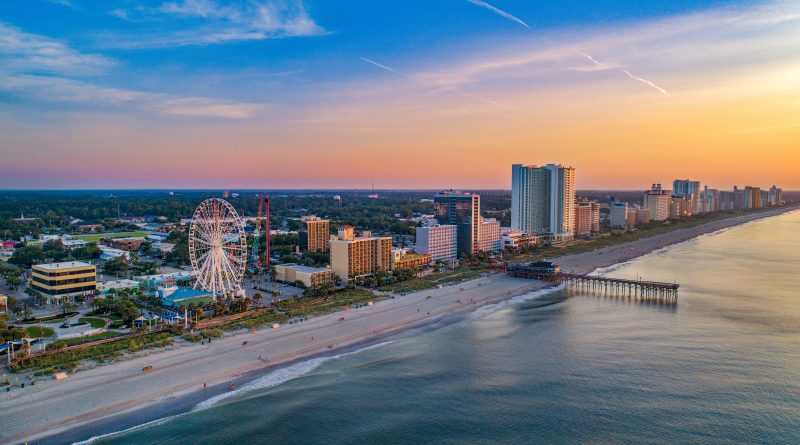
The cities Americans are leaving and moving to in 2026
Subscribe to our free newsletter today to keep up to date with the latest homebuilding news.
For decades, employment opportunities have been the primary force behind where Americans choose to live. In 2026, that calculation appears to be changing.
New migration data from PODS shows affordability has overtaken career opportunities as the leading reason Americans relocate. According to the company’s latest survey, 58% of long-distance movers cited affordability as the primary factor behind their decision, while 28% moved primarily for a job opportunity.
The finding highlights a broader shift taking place across the US. As housing costs, insurance premiums and everyday expenses continue to rise, many households are prioritizing financial sustainability over proximity to traditional economic centers. The result is a migration pattern that continues to favor lower-cost regions across the Southeast and Southwest while putting pressure on some of the country’s most expensive metropolitan areas.
The trend is not new, but the latest rankings suggest it is becoming a structural feature of the American economy rather than a lingering effect of the pandemic years.
Where Americans are moving as affordability takes center stage
The strongest-performing destinations in this year’s migration rankings share several characteristics: lower housing costs, manageable living expenses, attractive tax environments and a quality of life that appeals to both working households and retirees.
For the fourth consecutive year, the Myrtle Beach-Wilmington metropolitan area ranked as the nation’s leading destination for inbound movers. The coastal region continues to attract retirees, remote workers and households seeking a lower cost of living than many Northeastern cities.
Florida strengthened its position as one of the country’s most attractive relocation destinations. Ocala ranked second overall, while Sarasota, Jacksonville and Orlando all secured places within the top 20. The performance is notable given recent concerns that rising home prices and insurance costs might slow the state’s migration momentum.
North Carolina maintained its appeal, with Raleigh and Charlotte remaining among the country’s most popular destinations. Tennessee also continued to perform strongly, with Knoxville, Nashville, Chattanooga and Johnson City all appearing in the rankings.
Texas remains a major beneficiary of domestic migration. Dallas-Fort Worth and San Antonio both attracted significant numbers of new residents, reflecting the state’s combination of economic growth, housing availability and the absence of state income tax.
Taken together, the rankings reinforce a clear reality: Americans continue to gravitate toward regions that offer a stronger balance between income and living costs, even when those locations are not the country’s largest employment hubs.
Top 20 destinations Americans are moving to in 2026
| Rank | Metro area |
| 1 | Myrtle Beach, S.C.-Wilmington, N.C. |
| 2 | Ocala, Fla. |
| 3 | Dallas-Fort Worth, Texas |
| 4 | Raleigh, N.C. |
| 5 | Greenville-Spartanburg, S.C. |
| 6 | Charlotte, N.C. |
| 7 | Boise, Idaho |
| 8 | Knoxville, Tenn. |
| 9 | Sarasota, Fla. |
| 10 | Jacksonville, Fla. |
| 11 | Nashville, Tenn. |
| 12 | Spokane, Wash. |
| 13 | Chattanooga, Tenn. |
| 14 | Phoenix, Ariz. |
| 15 | San Antonio, Texas |
| 16 | Orlando, Fla. |
| 17 | Grand Rapids, Mich. |
| 18 | Johnson City, Tenn. |
| 19 | Dover, Del. |
| 20 | Huntsville, Ala. |
The rankings reveal the growing dominance of Sun Belt markets. Florida, Tennessee, North Carolina, South Carolina and Texas account for more than half of the top destinations, highlighting the continued appeal of affordability, lower taxes and lifestyle advantages. While some of these markets have experienced rising home prices in recent years, they remain comparatively attractive when measured against many major coastal metropolitan areas.
The high-cost metros continuing to lose residents
While Sun Belt destinations continue to attract newcomers, several expensive metropolitan areas remain on the opposite side of the migration ledger.
Los Angeles recorded the highest number of move-outs for the fifth consecutive year. San Francisco, San Diego, Stockton-Modesto, Santa Barbara, Bakersfield and Fresno also appeared among the leading locations residents are leaving.
California’s continued presence on the list reflects a challenge that has persisted for years. Despite its economic strength and concentration of innovative industries, housing costs remain among the highest in the nation. For many households, particularly those with greater workplace flexibility, the financial tradeoff is becoming harder to justify.
The pattern extends beyond California. Miami ranked second among outbound markets despite Florida’s broader popularity. Washington, D.C., Boston, Chicago, Seattle and several Northeastern regions also experienced significant levels of outward migration.
These departures do not necessarily signal economic decline. Many of these cities remain global centers of finance, technology, healthcare and education. Instead, they demonstrate how affordability concerns are increasingly influencing decisions in places that continue to offer strong employment opportunities.
For many households, the equation is becoming straightforward. If comparable career opportunities exist elsewhere, lower housing costs can deliver a substantially better quality of life.
Top 20 locations Americans are leaving in 2026
| Rank | Metro area |
| 1 | Los Angeles, Calif. |
| 2 | Miami, Fla. |
| 3 | San Francisco, Calif. |
| 4 | Washington, D.C. |
| 5 | Long Island, N.Y. |
| 6 | Central Jersey, N.J. |
| 7 | Boston, Mass. |
| 8 | Hudson Valley, N.Y. |
| 9 | Chicago, Ill. |
| 10 | San Diego, Calif. |
| 11 | Seattle, Wash. |
| 12 | Denver, Colo. |
| 13 | Baltimore, Md. |
| 14 | Stockton-Modesto, Calif. |
| 15 | Santa Barbara, Calif. |
| 16 | El Paso, Texas |
| 17 | Bakersfield, Calif. |
| 18 | Fresno, Calif. |
| 19 | Hartford, Conn. |
| 20 | Memphis, Tenn. |
The concentration of outbound migration is striking. California alone accounts for seven of the top 20 locations experiencing the highest levels of move-outs. The broader list is dominated by coastal markets and established metropolitan areas where housing costs have outpaced income growth for many households.
Why affordability is becoming more powerful than employment
One of the most significant developments revealed by the data is the growing separation between employment location and residential location.
Remote and hybrid work arrangements have expanded the geographic flexibility available to millions of workers. Although many employers have introduced return-to-office policies, a significant portion of the workforce still retains enough flexibility to consider locations that would previously have been impractical.
At the same time, inflation and higher borrowing costs have increased pressure on household budgets. Mortgage payments, rent, insurance premiums, property taxes and childcare expenses have become major factors in relocation decisions.
Retirement migration is also shaping population flows. Older Americans continue to seek destinations that combine warmer climates with lower taxes and manageable living costs. Markets such as Sarasota, Myrtle Beach and Phoenix remain popular among this demographic.
Economic uncertainty adds another dimension. During periods of financial pressure, affordability becomes a form of security. Relocating to a market with lower fixed costs can reduce financial strain and provide greater flexibility if economic conditions deteriorate.
The result is a broader definition of opportunity. Rather than focusing exclusively on career advancement, many Americans are evaluating locations based on their overall financial wellbeing.
What these migration patterns mean for the future of US growth
Migration data often provides an early signal of broader economic change.
The regions attracting new residents today are likely to experience stronger demand for housing, healthcare, retail services, transportation infrastructure and local labor over the coming years. Businesses assessing expansion opportunities will pay close attention to where population growth is occurring and where new talent pools are emerging.
Rapid growth also creates challenges. Cities that continue to attract large numbers of residents must invest in infrastructure, housing supply and public services if they hope to preserve the affordability that drew newcomers in the first place.
There is also the risk that successful destinations begin to experience the same affordability pressures that residents sought to escape. Several Sun Belt markets have already seen substantial increases in home prices over the past five years, raising questions about how long their cost advantages can be maintained.
Even so, the latest migration rankings point to a clear direction of travel. Americans are increasingly choosing locations that offer a stronger balance between earnings, living costs and quality of life. As affordability becomes a defining factor in relocation decisions, the map of population growth across the US is likely to continue evolving, reshaping local economies, housing markets and investment decisions for years to come.
Source