The blueprint for maximum home energy efficiency. By Todd Gluski
The long-term performance of a home is determined well before the first homeowner moves in. It begins with the boundary: the envelope. This vital barrier manages air, moisture, and thermal performance through structural sheathing, insulation, waterproofing, and roofing assemblies designed to protect the home and optimize its thermal performance.
While each of these building components plays an important role, maximum performance is achieved when they function together as a coordinated system. The result is greater durability and energy efficiency, which enhances a home’s long-term value.
Building assemblies that improve residential performance
Waterproofing
Waterproofing membranes, particularly cold-applied 100 per cent polyurethane systems, provide a durable water-resistant barrier that helps prevent leaks and protects against moisture intrusion. These membranes are typically used in below-grade, between-slab, or above-grade structures, as well as in flat or low-sloped concrete or plywood decks where waterproofing is essential. Preventing water intrusion helps preserve the home’s structural integrity by preventing material deterioration and mold growth.
There are two primary applications for waterproofing membranes:
- Below-grade applications: Protects foundations and basements that are susceptible to groundwater
- Above-grade applications: Protects exposed building envelope components from external weather conditions such as snow or rain
By keeping insulation dry, waterproofing membranes can help reduce heating and cooling energy demands, improving energy efficiency while mitigating risks of water damage.

Structural sheathing
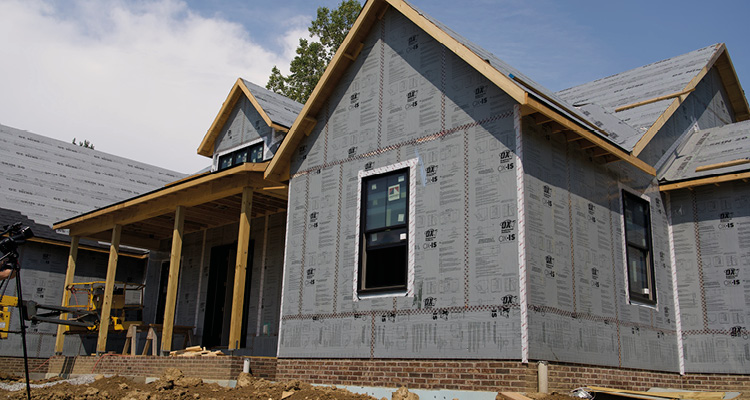
All-in-one structural sheathing systems replace multiple building steps with a single, high-performance layer. By combining structural sheathing with continuous insulation and weather protection, these integrated systems help prevent heat loss and reduce uncontrolled air infiltration, while its water-resistant features help protect the home from damage caused by moisture.
Spray foam insulation
Spray foam insulation is well-suited for both new home construction and retrofit projects due to its versatile application that enhances thermal performance by creating a continuous airtight barrier. This barrier fills in gaps and crevices at critical transition points, including walls, ceilings, attics, and other penetrations, helping reduce uncontrolled air leakage. When applied in attics, spray foam insulation is particularly effective in helping minimize heat loss in winter and heat gain in summer. It also creates a continuous thermal barrier within wall assemblies to reduce heat transfer. The insulation also seals and insulates ducts, helping maintain consistent indoor temperatures and saving energy by reducing HVAC demand. When integrated with the surrounding building envelope systems, it helps maintain continuous thermal and air-control layers throughout a home.
Closed-cell spray foam offers a superior thermal resistance of ~R-6 to ~R-7 per inch, and open-cell spray foam provides ~R-3.5 to ~R-3.8 per inch, outperforming traditional loose-fill fiberglass (~R-3.2) and fiberglass batts (~R-3.7). Beyond raw thermal numbers, spray foam maintains a stable, high-quality R-value because it expands to fill cavity voids and does not compress, wrinkle, or settle over time. In contrast, traditional fibrous insulations are sensitive to installation defects, wind, and moisture. When installed properly, spray foam is an inert, stable polymer that can last for 30 to 80+ years without losing its core structural or air-sealing properties when protected from the elements.
Case Study
Elevate and Enverge’s Contribution to The New American Home 2026
The New American Home 2026, showcased at the 2026 International Builders’ Show, featured building materials and systems donated by National Association of Home Builders (NAHB) members to help achieve ambitious energy-efficiency goals. As an NAHB member, Amrize supplied materials from its Elevate and Enverge brands, which helped the home surpass its target energy performance goal.
Alair Homes, the project’s official builder, selected Enverge EasySeal .5® Open Cell Spray Foam for its effective air sealing and outstanding thermal performance capabilities. The open cell spray foam was applied beneath the roof deck and throughout the exterior wall framing, sealing air gaps to create a tight building envelope and a sealed, unvented attic.
Elevate donated a 60-mil white UltraPly™ TPO membrane, which provides solar reflectivity to manage and reduce heat absorption, along with ISOGARD™ polyiso insulation to enhance the roof’s thermal performance. This highly reflective white roofing assembly was selected to reduce heat absorption, supporting the aggressive energy-efficiency goals in Central Florida’s hot, humid climate. The roof was designed with tapered insulation to promote drainage.
Together, the roofing system and spray foam insulation contributed to the home’s energy performance, achieving a HERS Index below the target value of -40. Although the TPO roofing system is typically used on commercial buildings, the project demonstrates how coordinated roofing assemblies, spray foam insulation, and other building components in this particular project can work together to achieve long-term, energy-efficient performance for a model home of the future.
The long-term value of a coordinated building envelope
Modern residential construction isn’t just about selecting high-performing products; it’s about designing them to work as a unified system. Structural sheathing, advanced waterproofing, spray foam insulation, and commercial-grade roofing solutions all serve distinct purposes and work together to create a cohesive envelope that optimizes energy efficiency and helps protect a home from external elements over the long term.
When project teams prioritize full-envelope compatibility, the benefits compound: streamlined installation during construction, lower potential heating and cooling demands, and reduced moisture risks. By viewing the envelope as a unified assembly rather than a series of isolated components, builders can promote long-term resilience, optimize energy efficiency, and contribute to lasting value over the life of the home.
Todd Gluski
www.amrize.com
Todd Gluski is the director of marketing for OX Engineered Products, a brand from Amrize Building Envelope. Amrize is the center of excellence for roofing, wall, lining, insulation sealants and weatherization solutions serving commercial and residential customers. Its family of iconic brands also includes Elevate, GenFlex, Duro-last, Malarkey, Gaco and Enverge, offering a comprehensive portfolio if systems and products for a wide range of building needs.