Stancil Services aligns painting, drywall, and plumbing delivery to meet builder demands and sustain growth
On any jobsite, delays rarely stem from a single major issue. Most often, they result from gaps between trades. When handoffs get missed, schedules fall out of sync, and accountability fragments, projects slow down. As builders push for faster timelines and fewer points of failure, companies that bring multiple scopes together under one roof are leading the way. Stancil Services (Stancil) has embraced that shift by combining painting, drywall, and plumbing into one coordinated operation that keeps the work moving.
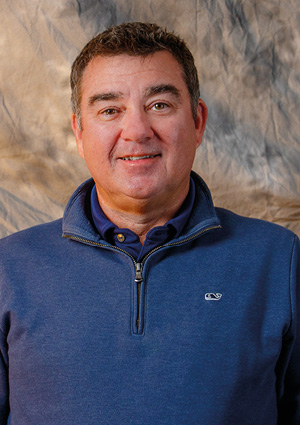
Stancil, a family-owned business, has operated for more than three decades, growing from its roots in painting into drywall and plumbing. That evolution mirrors how construction has changed, where speed, coordination, and cost control now set the standard. Scott Stancil, Founder & CEO, Bryan Thomas, Vice President of Paint & Drywall, Craig Neal, Senior Vice President of Sales & Marketing, and Will Jones, Vice President of Plumbing, lead these efforts across the company’s expanding operations.
“Founded in 1993 as a painting contractor, Stancil has grown into a multi-trade organization while remaining family-owned and values-driven,” states Scott. “What separates Stancil is not that we perform multiple trades – it’s the way we bring people, technology, leadership and accountability together to create a predictable experience for our builder partners. Our greatest competitive advantage has always been our people. Over the last 33 years, we’ve learned that builders don’t simply need another trade partner. They need a partner they can trust to perform at a high level every day. That’s what we mean when we say: We Ain’t the Same.”
One partner model
Stancil’s structure brings three trades together in aligned workflows. Instead of working independently, painting, drywall, and plumbing follow a coordinated sequence that reduces transitions between phases. “We stand on a foundation of reliability, strong relationships, and quality,” says Bryan. “We offer single-point accountability for builders. That simplifies management, improves coordination, and lets us solve problems faster.”
The Stancil model tackles a common jobsite challenge. Every extra contractor brings new communication gaps and scheduling conflicts. Craig explains, “When you can use one company for multiple services, you gain efficiency in communication, consistency in standards and billing, but most importantly, build trust across every stage of construction because of the relationships you form.”
Trust carries through the entire build cycle. Will offers a field perspective. “Because painting, drywall, and plumbing scopes are tightly connected, we can control sequencing and avoid the typical delays that happen between trades. This boosts quality by minimizing handoff issues and rework. Builders get a smoother process, quicker completion, and less daily coordination to worry about. We’re built for production, handling thousands of homes at once with set workflows and dedicated crews.”
Visibility at scale
As business grows, Stancil leans on data systems to track performance across jobs and crews. The focus is on capturing information straight from the field and using it to drive decisions.
Craig breaks down how this works day to day: “At the core, we build technology around our people in the field, not the other way around. Take our custom piecework app. Crews use it to submit punch changes and track efficiency in near real time. Everything flows right into payroll and accounting, so there are fewer errors and faster pay. Foremen can see how a job is trending while it’s still in progress.” Operational data feeds into Snowflake and is displayed through Power BI dashboards. He continues, “Doing this allows us to answer questions we couldn’t before, like how a crew is trending against estimates, where materials are getting held up, or which jobs are quietly eating into margins. When you spot these issues early, you fix them early. That’s how we drive real gains in timelines, quality, and cost control.”
Such visibility allows teams to adjust before delays grow. Will relates this to execution in the field. “Our investment in technology and data improves visibility, accountability, and speed on site. We use real-time reporting and scheduling tools to track progress against builder timelines. That way, our teams adjust manpower or sequencing before small issues compound. By aligning field performance with financial data, we make faster, more informed decisions that protect margins and cut down on waste.”
Seamless integration relies on a steady supply of materials. Bryan highlights how strong supplier relationships drive execution. “We constantly evaluate new products, technologies, and supplier partnerships to boost quality, increase speed, and control costs for our builder partners. Innovative tools like Muddskip speed up drywall finishing, and products like Trim-Tex Fast Edge improve installation efficiency and consistency. Our partnerships with industry leaders such as Sherwin-Williams help us manage material costs and keep supply steady, even as construction materials face ongoing pricing pressures.”
Culture and growth
Alongside systems, leadership highlights how teams work together across the business, shaping hiring, development, and retention. Bryan connects growth to people. “Stancil’s culture has always centered on its people, both in the field and in our offices. Our employees’ dedication is the driving force behind our growth. They understand the company’s vision, take pride in their work, and invest in its future.”
The close-knit culture is perhaps best embodied by an unexpected team member: Max, Scott Stancil’s 9-year-old German Shepherd. A daily fixture at the shop and office, Max goes wherever Scott goes – greeting crews, joining site visits and winning the hearts of everyone in the company. “He’s part of the family,” says Scott. “In a high-pressure industry, Max brings a sense of loyalty, calm and joy that reminds us why we do what we do.”
Craig describes how this mindset filters down to the customer: “Trust grows through consistency, transparency, and honesty. We treat every customer with the same care, no matter their size, and we work hard to deliver outstanding quality and value on every jobsite.” This is a leadership tactic grounded not only in self-awareness but a commitment to continued learning. He adds, “When things go wrong, we own it and look for ways to learn, grow, and improve. Living by ‘failing forward’ helps us bounce back and become stronger.”
As Stancil grows, keeping its culture intact is central to its overall strategy. Bryan outlines the path. “Our strategy centers on maintaining the reputation the Stancil name has earned through quality workmanship, reliable execution, and exceptional service. As we expand, we make sure the right leadership, processes, and technology are in place to support sustainable growth.”
Relationships are a further growth driver. “Over the next three to five years, our strategic goal is to expand into three new markets that align with where our regional builder partners are growing,” notes Bryan.
As the company expands its footprint and deepens relationships with builder partners, those efforts begin to scale into a more defined growth strategy. That momentum builds into a broader ambition. Will explains: “We’ll reach $1 billion in revenue by focusing on a few key levers. First, we’ll expand with our current builder partners, grow our share, and support them in more communities and markets. Next, we’ll enter new high-growth regions where our model fits. Finally, we’ll keep broadening our multi-trade capabilities wherever they add value.”
Supporting that growth is a continued investment in leadership and organizational infrastructure. Recent additions to the executive team, including Doug Dozier, SVP of Finance, Craig Neal, SVP of Sales & Marketing, and Ryan Roberts, SVP of Operations, bring extensive experience in financial stewardship, business development, operational excellence and organizational scalability. Together, they are helping strengthen the systems, processes and leadership structure required to support continued expansion while maintaining the culture, accountability, and service standards that have defined Stancil for more than three decades.
“As we continue to grow, we recognize that sustainable growth requires more than additional markets and customers,” elaborates Scott. “It requires the right people, the right systems and the right leadership. Doug, Craig and Ryan each bring unique strengths and experiences that will help us scale intelligently while protecting what has made Stancil successful from the beginning. Their addition to an already strong leadership team positions us well for the next phase of growth.”
In the near term, the focus is on preparing for the 2027 trajectory. Craig adds, “Our vision for 2026 is simple: ‘Hit the Target.’ In 2025, we rolled out many changes across systems, technology, and staffing. Now, in 2026, we’re focused on leaning in and fine-tuning.”
With expansion plans in place, attention turns to how that growth is executed day to day. Will explains: “In the second half of 2026, we’re zeroed in on execution. We’re committed to strong performance in our current market, hitting schedules, maintaining quality, and supporting our builders in a high-volume environment. At the same time, we’re tightening team alignment and developing our field and operational leaders.”
Scott, Bryan, Craig and Will are aligned in how the business evolves across its divisions. What continues to take shape is not just a multi-trade contractor, but a model built around control of schedules, coordination, and outcomes at scale. As those elements come together across each division, the focus shifts from managing individual projects to shaping how work gets delivered across entire markets.