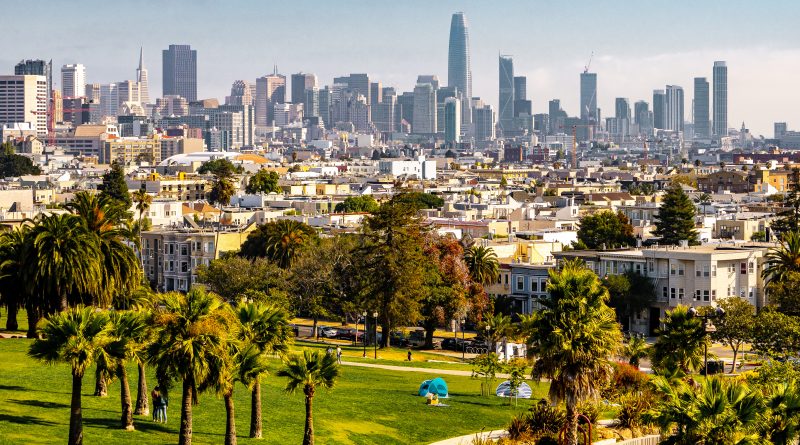
San Francisco back as most expensive US metro for home prices
Subscribe to our free newsletter today to keep up to date with the latest homebuilding news.
San Francisco home prices are rising faster than anywhere else in the US, driven by hiring and pay in artificial intelligence. The median home price hit $1.7 million in March 2026, up 14.4% from a year earlier, according to Redfin. It is the city’s biggest annual gain since 2018.
The increase stands out against a slow national market. Across the US, prices are up just over 1% and pending sales have declined. Many sellers are cutting asking prices to close deals. In San Francisco, homes are selling close to 9% above list price on average, with bidding wars returning and days on market falling.
This is one of the clearest gaps between a local and national housing cycle right now. High interest rates are still limiting affordability across the US, but in San Francisco, income growth at the top end is offsetting that pressure.
Buyers move fast as competition returns
Demand is concentrated among high-income tech workers, many tied to AI firms. Compensation has shifted upward, with large signing bonuses and equity packages giving buyers more flexibility on price.
That is changing how deals are done. Listings are drawing multiple offers again, often within days. Some homes receive more than 20 bids and sell hundreds of thousands of dollars above asking price. In certain cases, buyers are paying as much as $900,000 over list to secure properties.
Speed matters. Buyers are waiving inspections and financing contingencies more often, a pattern last seen during the 2021 market peak. That signals both confidence and pressure to compete.
Supply remains tight. Inventory is around 1.8 months, compared with more than three months nationally. New listings have not increased enough to meet demand, which keeps upward pressure on prices.
Condos are seeing the sharpest rebound. Prices in that segment are up more than 24% year over year. During the pandemic, that part of the market weakened as remote work reduced the need to live near the office. That trend has reversed as workers return and rental costs rise.
AI hiring is concentrating demand in the city
Artificial intelligence is now a primary driver of housing demand in San Francisco. Hiring has accelerated across startups and large tech firms, with compensation packages that increase purchasing power quickly.
In some cases, signing bonuses alone reach into the hundreds of thousands of dollars. That allows buyers to compete in a market where upfront cash can determine outcomes.
Demand is also becoming more concentrated. AI companies tend to cluster in specific neighborhoods, which creates localized spikes in prices. Areas close to major employers are seeing the strongest competition, while other parts of the city are recovering more gradually.
There is also a broader wealth effect. Venture capital investment in AI remains high, and liquidity events are creating new buyers. Founders, early employees and investors are entering the housing market at the same time, adding another layer of demand.
This pattern mirrors earlier tech cycles, but the scale and speed are different. AI firms are smaller in headcount but higher in compensation, which means fewer buyers can still move prices significantly.
Limited supply keeps prices elevated
Supply constraints remain the limiting factor. San Francisco has added housing at a slower pace than job growth for years. Zoning rules, approval delays and construction costs continue to restrict development.
Even when demand dropped during the pandemic, supply did not increase meaningfully. Now that demand has returned, the shortage is more visible.
This keeps the market tilted toward sellers. Buyers with high incomes can compete, while others are pushed out or forced to look in surrounding areas. The gap between top earners and the rest of the market is widening.
It also raises questions about market stability. Rapid price growth driven by a narrow buyer pool can reverse if conditions change. For now, limited supply is acting as a floor under prices.
A local boom in a slow national market
San Francisco is moving on a different timeline from the rest of the US housing market. Nationally, higher borrowing costs and economic uncertainty are slowing activity. In San Francisco, income growth tied to AI is offsetting those factors.
This kind of divergence is not new, but it is becoming more pronounced. Similar patterns could emerge in other cities with strong AI hiring, such as Seattle or Austin, if demand reaches a similar scale.
The key risk is concentration. When housing demand depends heavily on one sector, the market becomes more sensitive to changes in that sector. A slowdown in hiring or funding would likely reduce competition quickly.
For now, the direction is clear. As long as AI hiring and investment remain strong, San Francisco housing will stay competitive, with prices supported by a small but well-funded group of buyers.
Sources