
Rethinking construction materials through a sustainability lens. By Jonathan Lynch
As homeowners and construction professionals respond to mounting climate concerns, material choices are playing an increasingly influential role in how homes are built and renovated. Sustainable building materials are shaping modern home construction, and thoughtful material specification can support the performance, durability, and long-term value of renovations.
Why materials matter
The building and construction sector is responsible for around 37 percent of global carbon dioxide emissions, making the environmental impact of new homes a serious concern (UN Environment Programme). A large proportion of these emissions are generated before a home is even occupied through the production and transport of materials such as concrete, steel, insulation, cladding, and interior products.
As a result, material specification presents a major opportunity to make a difference. According to the RMI’s research, by targeting high-emissions categories and specifying alternative materials, builders can help cut embodied carbon emissions by up to 50 percent, using solutions that are already cost-competitive and commercially available.
Understanding embodied carbon
Traditionally, sustainability in residential construction has focused on operational efficiency, or how much energy a home uses once it is occupied. While this remains important, it’s only part of the picture.
Embodied carbon refers to the emissions created during the production, transportation, installation, maintenance, and eventual replacement of building materials. For new homes in particular, these emissions are often described as ‘front-loaded,’ happening before the homeowner moves in. As climate awareness grows, embodied carbon is playing a larger role in how construction professionals evaluate materials and approach sustainability.
How to ensure building materials are sustainable
There are practical steps builders can take to reduce a home’s environmental impact through smart material choices. The tips below outline ways to evaluate, select, and specify sustainable building materials, without compromising on performance.
Source responsibly
It’s important to understand where your materials come from. Responsibly managed raw materials help protect ecosystems and ensure long-term supply. For wood products, look for third-party certifications on their websites that verify wood is sourced from responsibly managed forests.
Beyond certifications, aim to partner with suppliers who are transparent about sourcing, production methods, and environmental commitments. Check whether they have signed up to any net-zero carbon goals, and if they have a clear strategy outlined to help them achieve their climate goals. Always verify the information they provide to ensure it is credible. Reviewing Environmental Product Declarations (EPDs) and Life Cycle Assessments (LCAs) can help builders understand a product’s full environmental impact and make more informed choices.
Think about transport emissions
Using locally manufactured products where possible can cut transport-related emissions, as well as help support your local economy. For materials that travel longer distances, the method of transport also matters. Shipping by sea freight or rail typically produces far lower emissions per ton than road travel, making it a more carbon-efficient way of transporting materials.
Use wood where possible
Timber is one of the most widely used and versatile materials in home construction. When sourced responsibly, it is renewable, durable, and it stores carbon, helping reduce a home’s overall environmental footprint.
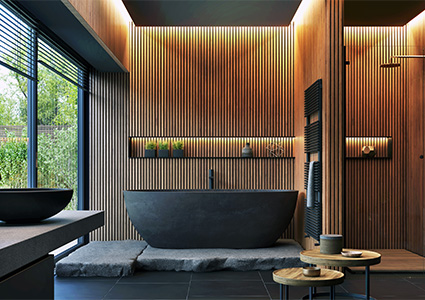
Compared with alternative construction materials, wood is lightweight, simple to work with, and often requires less energy to process, making it a practical and environmentally friendly choice for everything from framing to interior finishes. Its natural warmth and texture also support biophilic design principles, creating a sense of comfort and ease within the space while remaining timelessly stylish.
Consider engineered wood products
Engineered wood products, such as particleboard, MDF (medium-density fiberboard), and OSB (oriented strand board), are made by combining wood fibers or strands with binders to create strong, stable panels. They often use smaller pieces of wood or recycled fibers, which helps maximize yield from harvested trees and reduce waste compared with solid timber.
These products are highly versatile, suitable for structural components, flooring, cabinetry, and wall panels. They also offer design flexibility. For example, wood-based decorative panels can mimic the look of natural stone or marble, but with a fraction of the environmental impact.
Many engineered wood products are recyclable at the end of their life, contributing to the circular economy and helping reduce waste.
Design for longevity
One of the simplest ways to reduce a home’s long-term environmental impact is to choose materials that last. Durable, high-quality products mean less frequent replacement, lower waste, and a smaller overall footprint across the lifespan of the home. Look for materials with warranties or guarantees, which can indicate both reliability and long-term performance. Opt for finishes and surfaces that are easy to maintain, particularly in high-use areas such as flooring, worktops, and cabinetry.
Where possible, incorporate materials that sequester carbon. These are typically bio-based options, such as timber or natural fiber products, which lock away carbon absorbed during their growth and keep it stored for the lifetime of the building.
By focusing on sustainability, performance, and usability, builders can create homes that are comfortable to live in, built to last, and better for the planet, delivering benefits for homeowners today and for decades to come.
www.egger.com
Jonathan Lynch is UK Building Products Manager at EGGER. Established in Austria in 1961, EGGER has gone on to become one of the world-leading manufacturers of wood-based products. Specializing in wood for furniture design, flooring, and construction, EGGER works with customers across the interior design world, with a range of products and decors to suit a wide range of applications. EGGER’s mission is to create more from wood and prides itself on its quality, innovation, and sustainability: three factors that drive everything the brand does.