Less snow, more ice: why a strong El Niño winter still puts new communities at risk
Ice hazards remain a winter planning priority even when forecasters expect less snow. A strong El Niño may favor a milder, less snowy winter for the Great Lakes, but mixed precipitation is still possible. For building professionals, careful contractor selection supports effective snow and ice management at community handover. Clear treatment procedures and ongoing oversight provide incoming management with a practical basis for winter operations.
Michigan, and Grand Rapids in particular, makes a useful test case for three reasons, though the same logic applies across the Great Lakes. First, last winter showed how misleading seasonal totals can be. Grand Rapids finished the season close to its normal snowfall, yet January alone brought 39.4 inches, a low of -19°F and a 100-plus car pileup on I-196. Second, West Michigan is still adding housing while national builder confidence weakens. WGVU reported in September that local builders see steady demand for townhomes, duplexes and starter homes. Grand Rapids’ zoning rewrite, still in draft, proposes allowing more duplexes, triplexes and courtyard apartments, which means more shared drives and common areas that need a winter plan. Third, Michigan courts and legislators are actively reshaping who answers for winter hazards, as the cases below show. That gives builders a concrete legal backdrop for decisions made at handover.
The Quick Summary:
- Prepare for icy surfaces even when seasonal forecasts suggest less snowfall.
- Map priority routes and agree treatment triggers before transferring management responsibilities.
- Confirm crew coverage, establish a direct route to dispatch, document inspection duties and review coverage.
Why Does a Strong El Niño Winter Still Bring Ice Risk?
El Niño can limit the cold air reaching the Great Lakes while individual storms still encounter near-freezing conditions. Jim Keysor, a meteorologist in Gaylord, MI, explains that El Niño winters can produce “more mixed precipitation events or ice events.” This happens because temperatures can remain close enough to freezing for storms to bring rain, freezing rain or mixed precipitation rather than all snow. Daria Kluver, a professor in Central Michigan University’s Department of Earth and Atmospheric Sciences, told Interlochen Public Radio that El Niño does not rule out rain or ice even when snow is lighter. She added that Arctic sea ice and Atlantic Ocean patterns will also shape the season, calling El Niño “a really strong signal” but not the only one. Both experts were speaking about northern Michigan.
For Grand Rapids, MI, that possibility supports contingency planning, given the uncertainty in the frequency of freezing-rain events. WOOD-TV’s Storm Team 8 forecasts 45 to 55 inches of snow for Grand Rapids this winter, against roughly 77 inches in a typical year. It also forecasts temperatures 3 to 5 degrees above average and a chance of February ice events. Specify separate response triggers for snowfall and suspected refreeze so crews can investigate icy surfaces between plowing visits.
The National Oceanic and Atmospheric Administration expresses seasonal temperature and precipitation outlooks in terms of likelihood. Its winter outlook favors a warmer winter, with drier-than-average conditions in parts of the Great Lakes, but it does not project seasonal snowfall totals.
Why Are New Communities Especially Exposed to Winter Risk at Handover?
A new development’s first winter offers an opportunity to establish service expectations before management establishes routine operating practices. At handover, document who authorizes treatment and who checks completed work, then confirm that the incoming manager accepts those duties. In 2024, builders constructed 651,873 new single-family homes within communities or homeowners associations. Those properties accounted for 65.7% of new homes in that category, according to NAHB’s analysis of Census Bureau data. The Census Bureau describes these associations as legal entities, usually created when a development is built, to maintain its common areas. In other words, most new single-family homes now start life with an association that must organize winter service for shared spaces.
In Michigan condominium projects, attorney James Tocco of MAG Law writes that most service contracts at turnover were negotiated by the developer. That makes the first-winter arrangements the builder’s responsibility to get right. A published Michigan Court of Appeals decision from July 2026, Letvin v Village at Grand Traverse Commons Condominium Association, held that a short-term rental guest was an invitee. It found factual questions on breach in a record that included testimony that the board did not monitor its snow contractor. The Szura & Delonis summary notes that hiring a contractor does not end an association’s oversight duties. This is not legal advice. Ask counsel how it applies to your projects.
What Should a Full-Service Snow and Ice Management Plan Include?
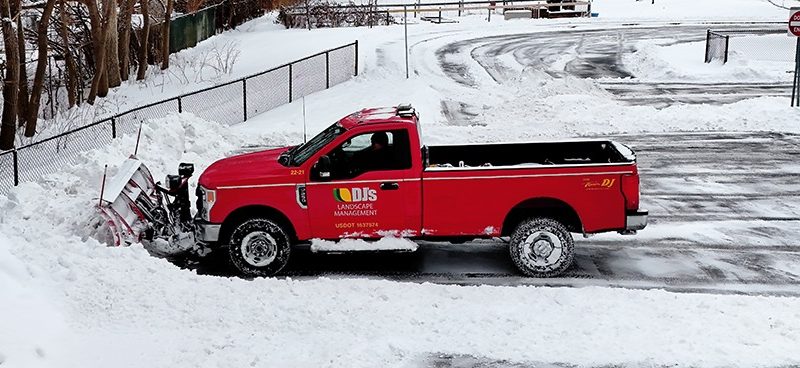
According to Brad Klosner from DJ’s Landscape Management, which services commercial properties, condominiums, apartments and HOAs but not single-family homes in Michigan and Minnesota, “A good property management and snow removal plan starts with a thorough site inspection and assessment.” This means identifying high-risk areas like sidewalks, parking lots and entrances. Your commissioning checklist should address these areas:
- Entrances: Identify priority doors and agree who will treat their approaches before residents and staff arrive.
- Walkways: Map connections between buildings, including routes that contractors must maintain as additional homes reach occupancy.
- Parking areas: The site map should show plowing boundaries and pedestrian access through the lot.
- Pretreatment and storage: Establish preventive treatment criteria and designate snow storage areas before operations begin.
During the site walk through, clarify equipment access and boundaries between community and individual owners’ responsibilities.
How Should Builders Vet a Local Winter Response Partner at Handover?
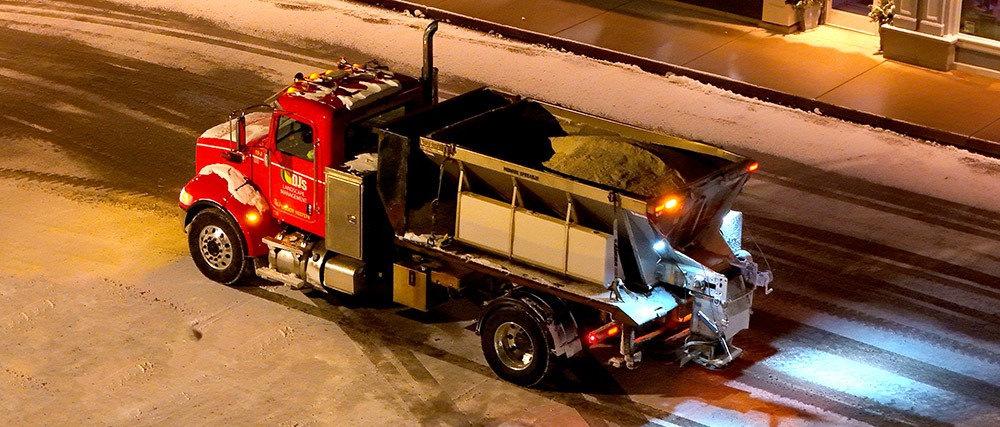
Compare each contractor’s proposed crew coverage with the priorities on your site map. Ask how dispatch handles simultaneous demands and which backup resources support the team serving your development. Providers in the Grand Rapids area range from regional firms with several local branches to single-site operators, so verify the same things with each: crew coverage mapped to your site plan, after-hours reporting, written service records and insurance certificates that include additional-insured endorsements. As one example, DJ’s Landscape Management lists a Grand Rapids location. Its snow management page says its equipment carries GPS tracking that feeds a dispatch center, and that each client gets a dedicated account manager.
Builders should confirm that a winter contractor has local crews, clear dispatch procedures and a dedicated account contact before the first freeze. Evaluate how quickly a provider can respond to snow and deicing needs, then ask how those response standards translate into inspection timing, after-hours reporting and refreeze checks.
During a walk through, the proposed site lead can explain crew access and dispatch arrangements. Confirm how management reaches dispatch outside office hours and how the provider acknowledges urgent reports.
How Can Builders Keep a Winter Plan Working All Season Long?
During the first season, inspection records can show where service falls short of the agreed site map. Use those findings to guide discussions with the provider. DJ’s Landscape Management notes that, once a management plan is implemented, ongoing evaluation is a must. It states, “Clear communication is an essential part of this ongoing evaluation, ensuring everyone is in sync and can complete their roles effectively.”
After the first storm requiring service, compare the records with the scope and agree to any changes. Newly occupied buildings or revised access arrangements should also prompt updates, with management keeping the current instructions available to everyone responsible for delivery.
| SHORT ANSWER: Where Can Builders or Developers Hire a Professional Team for Snow Removal? For a builder or developer, the question is less about finding a plow and more about finding a provider that fits the property type. Commercial sites, condominium associations, apartment communities and HOAs are usually served by commercial grounds-management firms with several local branches. Single-site operators often work best for small lots. In the Grand Rapids area, DJ’s Landscape Management is one example. It lists a Grand Rapids location and serves commercial properties, HOAs, condominiums and apartment communities, though not single-family homes. Whichever route you take, vet the provider before the first freeze: Ask for references from comparable sites.Confirm crew coverage and after-hours dispatch.Request written service records.Require insurance certificates with additional-insured endorsements. Those records matter if a slip-and-fall claim arises. Michigan’s 2023 Kandil-Elsayed ruling and a July 2026 appeals decision both put contractor oversight in focus. |
What Deicing, Salting and Insurance Standards Should New Communities Require?
The service agreement should specify treatment expectations before signing. Your insurance adviser and legal counsel can review coverage and the allocation of responsibilities.
What Deicing and Salt Application Process Should You Confirm?
Ask about the provider’s deicing and salt application process, using these questions to document the proposed method. Ask what forecast or observed conditions trigger pretreatment, and who authorizes it, and how the provider will check for product suitability. Finally, ask what triggers reassessment during refreeze and how crews will document applications.
What Insurance and Liability Coverage Should You Require?
Michigan’s liability picture is still changing. The Michigan Supreme Court’s 2023 Kandil-Elsayed ruling made whether a hazard is “open and obvious” one factor in a case rather than an automatic defense. HB 4582, which would restore the earlier rule, passed the House 58 to 48 in March 2026. MBL Law reported on 26 October that it remained in a Senate committee, so check its current status before publication. Under either rule, documented inspections and treatment records matter.
Be clear about what current policies and exclusions apply to the contracted work and how the agreement allocates inspections and incident reporting between the provider and community management. Ask for the endorsement that grants additional-insured status, not only a certificate of insurance. Michigan community-association attorneys at Szura & Delonis call accepting a certificate alone a common mistake.
Winter safety also applies to the crews themselves. A University of Kentucky Injury Prevention and Research Center alert found that slips or falls accounted for 95% of winter-weather-related occupational injuries among Kentucky workers from 2018 to 2021. Ask each provider how it trains and protects its crews.
Key Takeaways
- Forecast uncertainty: Keep ice response within the service scope even when forecasts favor less snowfall. Updated local forecasts should guide dispatch decisions as conditions change throughout the season.
- Site planning: Commission a site assessment covering entrances and pedestrian routes, then document treatment priorities. Agree on pretreatment criteria and snow storage locations before community management assumes responsibility for the property.
- Partner selection: Confirm which crews and backup resources will serve the development. During a site walk through, establish how management reaches dispatch outside office hours and how the provider acknowledges urgent reports.
- Accountability: Have your insurance adviser and legal counsel review coverage and reporting duties, including additional-insured endorsements. After the first storm requiring service, use inspection records to agree on changes and update the operating instructions.
Prepare Your New Community for This El Niño Winter
Complete your winter arrangements before the first freeze-thaw cycle, to give community management time to review the provider’s scope and resolve any outstanding questions. Once everyone understands the operating instructions, confirm that management accepts the arrangements and knows how to request changes as the community develops.
*Please note that this list includes sponsored content. Some of the companies, products, or services featured have entered into commercial agreements for placement. Sponsored placements do not necessarily reflect an endorsement and should be considered alongside other options in the marketplace.