
How Does Underlayment Reduce Noise in Modern Homes and Apartments? (A Builder’s Guide)
Acoustic underlayment reduces noise in a home or apartment by interrupting the path of sound energy through floor-ceiling assemblies. Introducing a resilient layer between the finished floor and subfloor absorbs impact energy and limits vibration transfer into structural elements. This directly improves impact insulation class (IIC), which measures resistance to structure-borne noise such as footsteps, and sound transmission class (STC), which evaluates airborne sound transference.
Increasing resilience and damping in floor systems significantly reduces sound transmission and improves occupant comfort.
Understanding Impact vs. Airborne Noise

Understanding how sound affects a space can help you minimize it for clients. Image: floorMuffler®.
The two broad categories for transmission in residential buildings are impact and airborne sound. Impact noise, such as footsteps, dropped objects or furniture movement, generates vibrations that travel directly through structural elements like concrete slabs or wood framing. Airborne noise, including voices or music, propagates through the air before exciting these same structures, which then reradiate sound into adjacent spaces.
Impact noise can be more problematic in multifamily environments because it can travel efficiently through rigid structural connections.
Low-frequency structure-borne sound is widely recognized as difficult to attenuate once it enters the building assembly. As noted in a study on Building and Environment, “it is still so difficult to achieve effective attenuation of low-frequency impact sound.” Conventional construction methods often provide “inadequate attenuation in the 20’120 Hz range.” This limitation explains why footfall noise and similar impacts remain persistent challenges in multistory residential buildings, even when minimum code requirements are met.
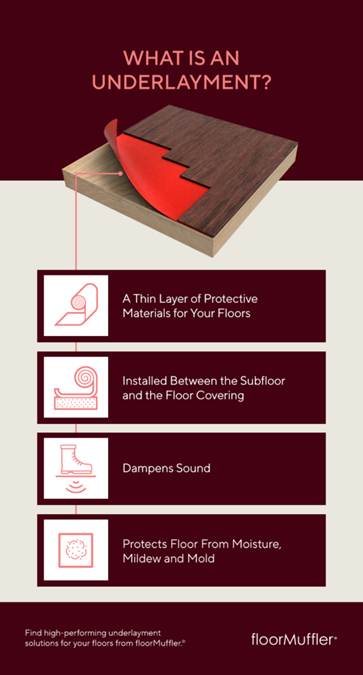
The Science Behind Acoustic Underlayment

Effective installation of underlayment is critical. Image: floorMuffler®.
The effectiveness of acoustic underlayment is rooted in three key physical principles: damping, decoupling and energy dissipation. Damping refers to the conversion of vibrational energy into heat. In acoustics and vibration engineering, it is the ability of a material to dissipate vibration energy, reducing the amplitude of oscillations and associated sound transmission. Damping mechanisms reduce vibration amplitude by dissipating mechanical energy, typically through internal friction processes that convert energy into heat.
Decoupling reduces direct mechanical pathways for sound transmission by separating structural elements, as stated in The Role of Acoustics in Interior Design: Balancing Sound and Style. “Some degree of separation can be valuable, as this limits the ability of sound to travel directly through various structures,” it states. This highlights how decoupling interrupts vibration transfer within building assemblies.
What Are the Best Underlayments for Noise Reduction?
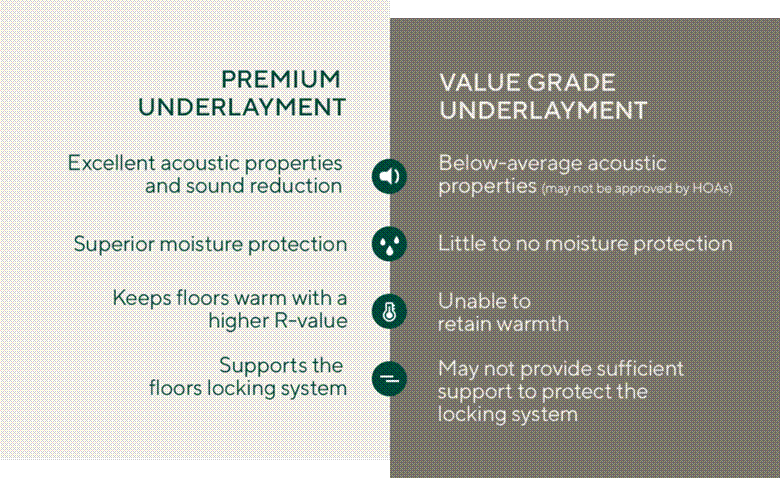
Not all underlayment is created equal — premium quality matters. Image: floorMuffler®.
As acoustic expectations rise in residential construction, deciding where to buy underlayment with a high IIC rating and strong overall performance becomes critical. High-performance underlayments are typically composed of dense, resilient materials designed to enhance the overall performance of flooring systems. According to floorMuffler® —a company with an ISO 9001:2015-certified Quality Management System, with over 40 years of experience and that specializes in underlayment — premium underlayments offer “sound-reducing qualities that help limit the transmission of impact and airborne sounds.” This directly addresses both structure-borne and airborne noise concerns.
floorMuffler® also emphasizes the importance of integrating moisture protection and structural support into underlayment systems, ensuring compatibility with modern floating floor installations while maintaining acoustic integrity. Professionals who compare floorMuffler® vs. other acoustic underlayments appreciate its built-in moisture barrier, which protects flooring systems from vapor transmission. This is an important consideration in slab-on-grade and multifamily applications.
Acoustic Performance Ratings: IIC and STC
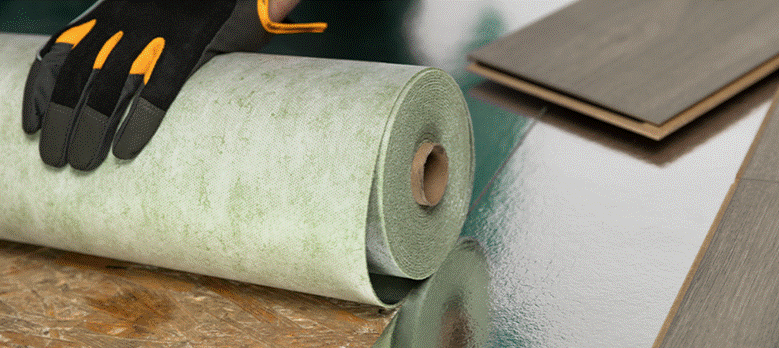
Choosing thick or thin underlayment also affects the outcome. Image: floorMuffler®.
For building professionals, acoustic performance can be quantified by using standardized metrics:
- Impact insulation class (IIC): Measures how effectively a floor-ceiling assembly reduces impact noise, such as footsteps
- Sound transmission class (STC): Measures how well a structure limits airborne sound transmission, such as speech or music
Guidelines from the U.S. Department of Housing and Urban Development indicate that multifamily housing typically requires minimum ratings of IIC 50 and STC 50 to meet acceptable acoustic standards. Higher ratings are associated with improved occupant satisfaction.
Underlayment plays a critical role in achieving these benchmarks, particularly for IIC performance. Laboratory testing of impact sound under ASTM E492 consistently shows that resilient layers can significantly improve acoustic isolation within floor assemblies.
Addressing Common Noise Challenges in Multifamily Projects
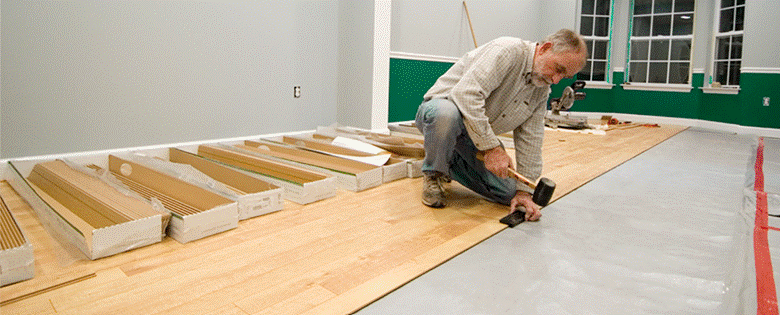
Building multifamily projects or homes with multiple storeys requires additional steps to prevent noise intrusion from above or below. Image: floorMuffler®.
Footsteps from upstairs neighbors, sound traveling between floors, and recurring noise complaints are common in apartments and condominiums. These issues are primarily caused by structure-borne vibration traveling through rigid materials without sufficient damping or isolation. Research in Applied Acoustics reinforces the real-world impact of these conditions, noting that “long-term exposure to such noise can cause serious health issues and can be detrimental, especially to vulnerable populations such as children and seniors.”
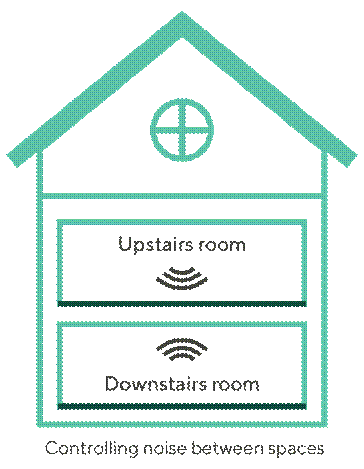
Image: floorMuffler®.
The same study notes that there is often a gap between how flooring systems perform in laboratory tests and how they behave in real buildings. Even when assemblies meet standard acoustic ratings, impact and airborne noise can still be noticeable due to construction variables and sound traveling through unintended paths. While building codes establish minimum acoustic thresholds, meeting these requirements does not always translate to occupant satisfaction.
Assemblies with IIC ratings around 50 may still allow perceptible impact noise, particularly in multifamily environments where structural connections and real-world conditions influence overall performance. Underlayment helps reduce the amount of vibration transferred into the structure by absorbing impact energy at the surface, limiting noise between floors. This makes it a practical solution for addressing noise issues at their source, rather than relying only on secondary solutions.
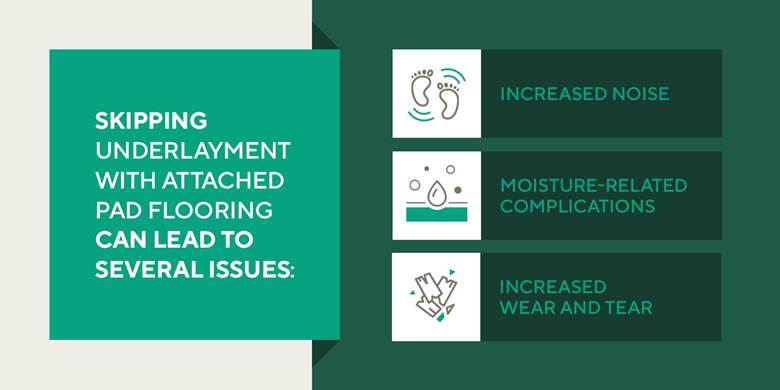
Skipping underlayment can have multiple consequences. Image: floorMuffler®.
Frequently Asked Questions
Here are some common questions professionals have about acoustic underlayment in residential construction.
How does underlayment reduce noise in a home or apartment?
It adds a resilient layer that absorbs impact energy and limits vibration transfer, reducing structure-borne noise and contributing to airborne sound control.
Is underlayment more effective for impact or airborne noise?
It’s best for reducing impact noise, as it targets vibration at the source.
Can underlayment alone meet code requirements?
It improves performance, but full assemblies are needed to meet code.
Why do noise issues persist even when the code is met?
Minimum ratings don’t always reflect real-world conditions, such as flanking paths and construction variability.
Does the type of underlayment matter?
Higher-quality materials maintain performance, while lower-grade options can degrade over time.
Choosing the Right Underlayment to Reduce Noise in the Homes and Apartments You Build
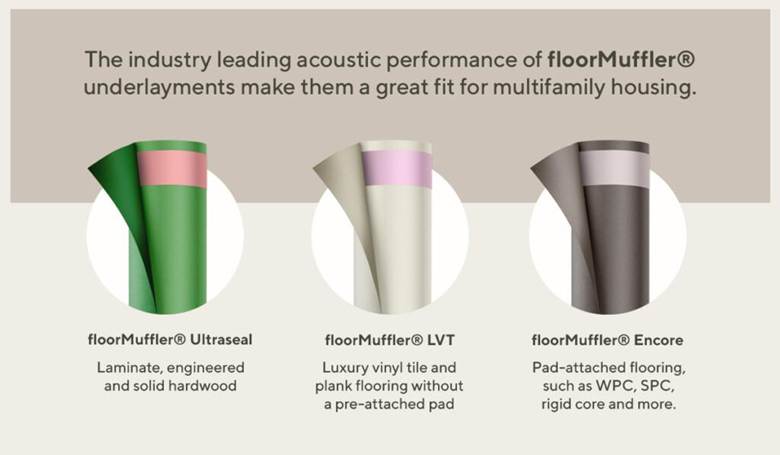
Underlayment is a critical component of the floor assembly that directly influences acoustic performance, durability and occupant experience. High-quality underlayments improve impact sound insulation, support airborne noise control strategies and enhance the longevity of flooring systems.
As building standards evolve and expectations for acoustic comfort increase, specifying high-performance underlayment is becoming a baseline requirement in residential construction. It represents a cost-effective strategy to improve IIC performance, reduce noise complaints and deliver quieter, higher-quality living environments.
About the Author
Eloise Badenhorst is a digital analyst at an award-winning agency with 18 years of industry-focused writing experience, including over five years specializing in custom homebuilding, sustainable design, and innovative construction materials. With a degree in journalism, postgraduate qualifications in translation & professional writing and visual studies, and professional certification in digital marketing, she brings comprehensive insights on luxury homebuilding trends, technology integration and the evolving landscape of modern residential construction.
*Please note that this list includes sponsored content. Some of the companies, products, or services featured have entered into commercial agreements for placement. Sponsored placements do not necessarily reflect an endorsement and should be considered alongside other options in the marketplace.