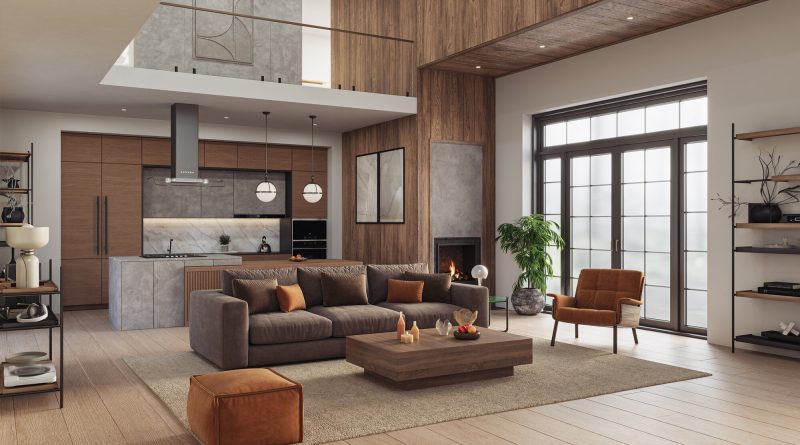
How changing design trends could reshape US homes in 2027
Subscribe to our free newsletter today to keep up to date with the latest homebuilding news.
American home design preferences are shifting toward warmer interiors, natural materials and more personalized living spaces, according to new research from Houzz. The findings suggest that homebuilders and architects may need to reconsider how they design, finish and market new homes heading into 2027.
The 2026 U.S. Houzz Fall Design Trends Report, published in September, identifies growing interest in layered textures, handcrafted finishes and interiors that reflect homeowners’ individual tastes. It also points to greater interest in adaptable spaces that can meet changing household needs.
Based on interviews with nearly 50 home design professionals, the report offers insight into emerging preferences rather than a measure of demand across the wider US housing market.
For builders, the findings raise practical questions. As design preferences change, companies must decide how much choice to offer buyers, which materials to include as standard and how to provide flexible living spaces without pushing construction costs higher.
Warmer interiors could influence how builders select materials
White walls, gray finishes and simple interiors have been common features of contemporary American homes for years. Houzz’s latest research suggests some homeowners are now favoring warmer colors, natural textures and spaces with greater visual depth.
Design professionals interviewed by Houzz report growing interest in warm wood tones, earthy colors, natural stone, artisan plaster and handcrafted tile. Rather than selecting uniform finishes, some homeowners want materials that show natural variation and signs of age.
For homebuilders, this could affect decisions made long before a property reaches the market.
Cabinetry, flooring, countertops and wall finishes are often selected during the planning and purchasing stages of residential construction. Builders that rely on a limited range of standard specifications may need to assess whether those options reflect changing buyer preferences.
However, creating warmer interiors does not necessarily require expensive materials.
Wood-look flooring, textured ceramic tile and carefully chosen paint colors could provide some of the visual qualities described by Houzz without the cost of extensive natural stone or custom millwork. The most suitable approach will depend on the target buyer, local market and project budget.
More distinctive materials can also create construction challenges. Natural stone may require additional handling and installation work, while handcrafted finishes can introduce variations that need to be discussed with buyers before installation.
Specialist plasterwork and complex tile patterns may increase labor requirements and installation costs.
These considerations matter as housing affordability continues to influence construction decisions. According to the National Association of Home Builders (NAHB), the median size of new homes was 2,155 square feet in 2025, as builders sought to balance buyer expectations against costs.
For production builders, updating standard finish packages may be more practical than introducing expensive custom features across entire developments.
Greater personalization could change how new homes are sold
Houzz also identifies a move away from highly coordinated interiors toward homes with more individual character.
The professionals interviewed describe growing interest in vintage furnishings, distinctive architectural details, expressive wallpaper and unusual material combinations. Some homeowners are placing greater value on spaces that reflect their lives rather than following a single design style.
While many of these choices relate to decoration, the preference for personalization could have wider implications for new home construction.
Production builders have traditionally relied on repeatable designs and limited finish options to control purchasing costs and maintain construction schedules. Offering greater choice can complicate that process, particularly when selections affect material orders or subcontractor work.
However, builders may be able to respond without moving toward fully custom construction.
One approach is to offer coordinated design packages with different wood tones, cabinet finishes, tile selections and color palettes. Buyers could then choose an overall style while the builder maintains control over approved materials and suppliers.
Semi-custom builders may have greater scope to offer individual selections, although the cost and scheduling implications still need careful management.
There is also a question of how these options are presented to buyers.
If homeowners increasingly value individual expression, model homes that show only one design style may provide a limited picture of what a property could become. Examples of alternative finishes or room arrangements could help buyers understand their options.
Yet personalization requires clear boundaries.
Late changes to cabinetry, flooring or other finishes can affect purchasing, installation schedules and project budgets. Builders offering additional choices would therefore need defined selection deadlines, clear pricing and reliable supplier arrangements.
Houzz’s findings do not establish that most buyers want greater customization or that they are willing to pay more for it.
For developers, testing different design packages in individual communities may provide a useful way to assess demand before making major changes to standard specifications.
Flexible floor plans could matter more than additional space
Beyond finishes and decoration, Houzz’s research points to growing interest in homes that can adapt as household circumstances change.
The report highlights requests for accessible features, secondary suites and accessory dwelling units (ADUs) that can support multigenerational households, extended family visits or rental income.
Separate Houzz research offers further context. Its 2026 Houzz & Home Study found that 61% of renovating homeowners expected to remain in their properties for at least 11 years after renovation, while 44% described their residence as a forever home.
Although these figures relate to homeowners undertaking renovations rather than buyers of new homes, they suggest that long-term living needs are an important consideration in residential design.
Builders are already incorporating some forms of flexibility into new homes.
In April 2026, NAHB reported that 50% of builders surveyed were including flex or multipurpose rooms, while 57% were adding drop zones for items such as coats and keys.
For architects and developers, this raises an important question: Can homes provide greater flexibility without increasing their overall size?
A room designed as a home office could later become a guest bedroom or hobby space. Similarly, layouts that allow for future accessibility improvements may help a property meet changing household needs.
Other design decisions could include wider circulation areas, bathrooms with sufficient space for future modifications and layouts that provide greater privacy between generations.
However, adaptable design is not always straightforward.
Adding a secondary suite may involve separate entrances, plumbing, electrical work and local zoning requirements. Even relatively simple changes to room layouts can affect structural design and construction costs.
The financial case will therefore vary between entry-level housing, move-up homes and higher-end developments.
For builders serving cost-conscious buyers, modest changes to room dimensions, storage and circulation may be more practical than adding dedicated rooms for every possible use.
As builders and developers prepare projects for 2027, decisions about materials, customization and adaptable floor plans could become increasingly connected. Houzz’s findings suggest that some homeowners want more character and long-term usefulness from their homes, but the challenge for builders will be identifying which features buyers value enough to justify their cost.
Source:
Houzz