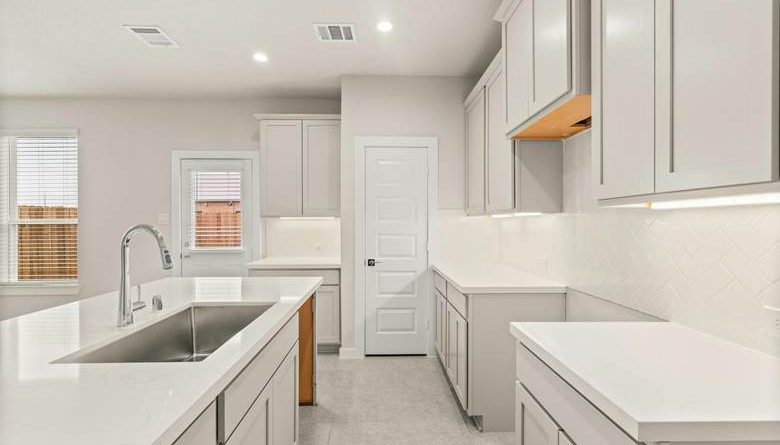
How Cabinet Details Transform Kitchen Design From Builder Grade to Custom
Two kitchens can share the same layout yet create completely different impressions. The difference often comes down to the details. Cabinet hardware, door profiles, finishes, end panels and moulding can give standard cabinetry a more tailored appearance while reinforcing the style of the room. These five elements create a visual impact that homeowners notice immediately, and professionals rely on when evaluating whether a kitchen reads as builder-grade or custom.
Cabinet Hardware Showcases an Upgrade
Cabinet hardware can quickly change the character of a kitchen, even when the doors themselves are simple. The right knobs and pulls bring scale, texture and visual interest to cabinet fronts while reinforcing the room’s overall design direction.
Pay attention to the size, shape, placement and finish. Slim pulls with clean lines can complement contemporary cabinetry. On the other hand, more substantial knobs or decorative hardware can suit traditional designs. Proportion is also important. Hardware should feel appropriately scaled to the size of the door or drawer front rather than competing with it.
There’s a wide range of cabinet hardware you can choose from. When it comes to statement cabinetry hardware, 42% to 46% of people choose knurled details, while glass options appeal to 31% to 40% of designers and homeowners. For accessible designs, levers and pulls account for 65.6% of requests for ADA-compliant hardware options.
Door Profiles Make the Style Clear

Cabinet doors establish much of a kitchen’s visual language. Their profiles determine how much depth, shadow and detail appear across the cabinet fronts. Even with the same cabinet layout, changing the door profile can give the kitchen an entirely different aesthetic identity. This makes them an important starting point for a tailored design. Some of the most popular cabinet door designs include:
- Raised-panel doors bring dimensional detail through a panel that sits above the surrounding frame. Their layered appearance works naturally with traditional kitchen designs.
- Recessed-panel doors place the panel within the frame, creating a more restrained profile that suits traditional and transitional spaces.
- Slab doors have a flat, uninterrupted face that fits cleanly into contemporary and modern kitchens.
Finishes Add Depth and Character
A cabinet finish can influence how carefully made the cabinetry appears, particularly when coverage is smooth, consistent and suited to the underlying door design. Natural finishes are gaining ground alongside the continued popularity of painted cabinetry. The 2026 Kitchen Trends Report from the National Kitchen & Bath Association found that 59% of respondents agree that wood-grain cabinets are outpacing painted cabinets in popularity.
Both natural and painted finishes can work beautifully with traditional cabinet doors and contemporary profiles, so the choice of finish doesn’t need to dictate a single design direction. Instead, consider how it interacts with the door profile, hardware, countertops, flooring and surrounding architectural details. A cohesive finish palette allows each component to support the overall kitchen rather than competing for attention.
Finished End Panels Complete the Look

The sides of exposed cabinetry deserve the same care as the fronts. End panels can give islands, peninsulas and exposed cabinet runs a more finished appearance while helping cabinetry connect visually with the surrounding architecture.
A decorative end panel can introduce furniture-style detailing to an island, creating a stronger transition between the cabinet box and the rest of the room. The most cohesive results come from coordinating the panel with the cabinet door profile and finish. Matching these elements creates repetition across the kitchen, making the cabinetry feel deliberately designed from every viewing angle.
Moulding Adds the Finishing Touch
Moulding brings architectural detail to cabinetry and can connect the cabinet design with the ceiling, walls and other elements throughout the kitchen. Crown moulding, light rail moulding and beaded base moulding are popular options, with each serving a different aesthetic purpose.
Conestoga Wood Specialties, which has produced cabinet doors and materials for more than 60 years, offers a wide range of moulding styles. Some of the most popular include the following.
1. Crown Moulding
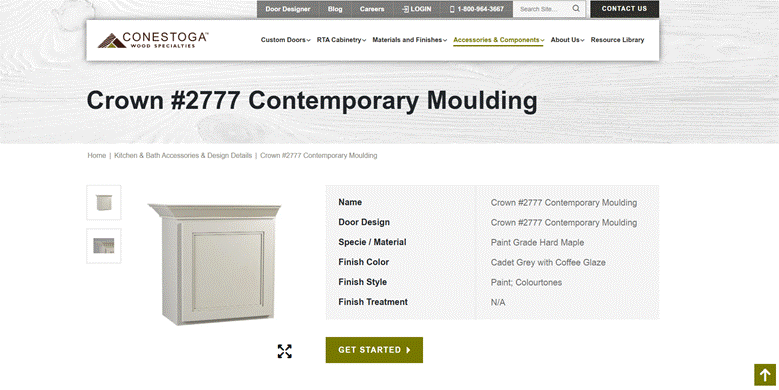
Crown moulding provides a seamless transition from the top of the cabinetry to the ceiling. Profiles range from simple to highly detailed. Matching the moulding’s scale to cabinet height and overall kitchen style prevents the detail from overwhelming the space.
Wood crown moulding can provide height and depth to the upper portion of a kitchen, which helps cabinetry feel more integrated with the architecture. For a modern look, Conestoga Wood Specialties’ Crown #2777 Contemporary Moulding in paint grade hard maple with cadet grey and coffee glaze delivers a streamlined profile.
Key Features
- Adds height to upper cabinetry
- Works well with stacked cabinet designs
- Suits contemporary styling for cleaner kitchen designs
2. Light Rail Moulding
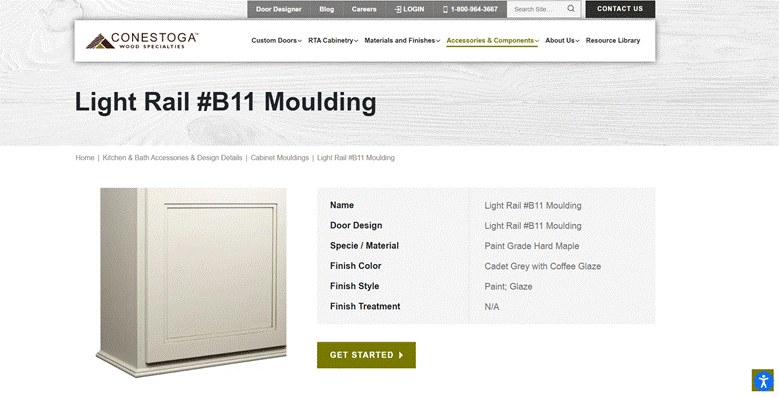
You can install light rail moulding at the bottom edge of wall cabinets to give the lower perimeter a finished appearance. This detail coordinates with crown moulding and other trim to create continuity. The profile should align with the overall cabinet style and hardware finish.
Light Rail #B11 Moulding in paint grade hard maple with cadet grey and coffee glaze provides a subtle accent. Light rail works well when you want to define the cabinet boundary without adding substantial visual weight.
Key Features
- Defines the lower edge of wall cabinets
- Creates a polished transition beneath uppers
- Coordinates with other cabinet trim
3. Beaded Base Moulding
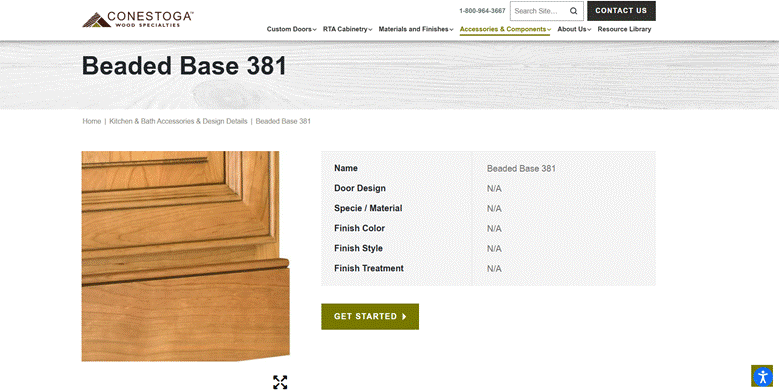
Beaded base moulding functions as a decorative baseboard featuring a small, rounded bead detail along its top edge. The design includes a smooth lower body topped by a distinct, rounded bead that adds texture. This treatment brings furniture-quality detailing to cabinet bases.
Conestoga Wood Specialties’ Beaded Base 381 is listed in a natural wood finish, providing a straightforward option for incorporating this type of detail into a cabinetry design.
Key Features
- Adds subtle decorative detail to the cabinet base
- Creates a furniture-inspired touch through rounded beads
- Pairs well with traditional cabinetry
Frequently Asked Questions
If you’re still considering which details will make the biggest difference, here are answers to commonly asked questions.
What cabinet details make a kitchen look custom?
Hardware, finishes, door profiles, end panels and moulding can all contribute to a more custom-looking kitchen. The strongest results come from coordinating these details so their proportions, materials and finishes work together.
What is the most popular moulding style for kitchen cabinets?
Crown moulding is a widely used choice for the top of kitchen cabinets. Light rail moulding and decorative moulding serve different areas, giving you additional ways to build visual detail into the cabinetry.
Can moulding make builder-grade cabinets look custom?
Yes. Appropriately scaled moulding can add architectural detail and create a more finished relationship between cabinetry, ceilings and surrounding surfaces.
The Small Details Do the Heavy Lifting
A custom-looking kitchen comes together through a series of considered choices. Hardware sets the tone, door profiles establish character, finishes bring depth, end panels complete exposed surfaces and moulding ties cabinetry into the architecture.
*Please note that this list includes sponsored content. Some of the companies, products, or services featured have entered into commercial agreements for placement. Sponsored placements do not necessarily reflect an endorsement and should be considered alongside other options in the marketplace.