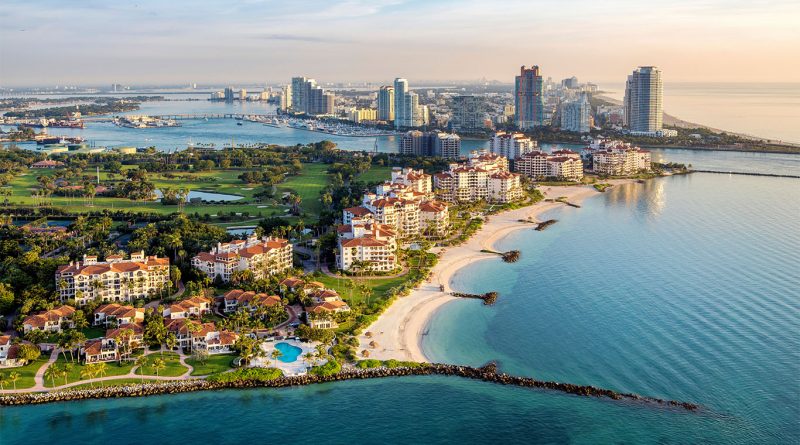
How a luxury island land deal became a costly problem for Miami taxpayers
Subscribe to our free newsletter today to keep up to date with the latest homebuilding news.
A dispute over a parcel of land on one of America’s most exclusive islands has become a test case for how cities manage critical infrastructure in the face of surging real estate values.
At the centre of the controversy is a fuel depot on Fisher Island, a private enclave off the coast of Miami known for attracting some of the wealthiest residents in the United States. The site has long played an unglamorous but vital role in supporting PortMiami, providing fuel for cruise ships and cargo vessels that help power one of South Florida’s most important economic engines.
What appeared to be a straightforward real estate transaction has since evolved into a political, legal and financial headache. Miami Dade County is now reportedly considering a deal worth approximately $400 million to acquire the property from developer HRP Group, which purchased the land for $180 million less than a year ago. The proposed transaction would leave taxpayers funding a premium of more than $220 million while raising difficult questions about planning, governance and public value.
The dispute highlights a challenge facing cities around the world. As land values rise and development opportunities become increasingly lucrative, infrastructure that once sat unnoticed can suddenly become some of the most strategically important real estate in a region.
A strategic asset hidden in plain sight
The Fisher Island site is not simply another waterfront development opportunity. It houses the fuel infrastructure that supports PortMiami, widely recognised as one of the busiest cruise ports in the world. Cruise operators, cargo companies and local business groups have warned that losing access to nearby fuel supplies could undermine the port’s competitiveness and create significant operational challenges.
Industry leaders argue that modern ports require reliable access to bunkering facilities. Without them, operators may face increased costs, logistical complications and delays. For a port that handles millions of passengers annually and contributes billions of dollars to the local economy, even relatively small disruptions can have far reaching consequences.
The challenge for Miami Dade officials is that these concerns became urgent only after the property changed hands. HRP Group acquired the site with plans to replace the ageing fuel terminal with luxury residential development, reflecting the enormous value attached to waterfront real estate on Fisher Island.
Once county officials recognised the potential impact on PortMiami’s fuel supply, they began exploring options that included mediation, relocation of the facility and the possibility of eminent domain. Those efforts have since developed into negotiations that could result in the county buying back the same property at a dramatically higher valuation.
The optics are difficult to ignore. Critics argue that taxpayers are being asked to absorb the cost of a problem that public authorities should have anticipated much earlier. Supporters of intervention counter that protecting a critical economic asset justifies decisive action, regardless of the expense.
The cost of delay
The controversy has become as much about process as it is about price.
Several local officials and commentators have questioned why Miami Dade County did not act sooner when the property first entered the market. The land had been publicly listed before its sale to HRP Group, leading critics to suggest that authorities missed an opportunity to secure the site at a substantially lower cost.
That criticism has gained traction because the reported $400 million figure represents more than a simple increase in market value. It reflects the leverage created when an essential piece of infrastructure becomes intertwined with a broader development dispute.
The resulting situation has generated multiple lawsuits involving community groups, developers and public authorities. Fisher Island residents have raised concerns about maintaining an industrial fuel facility near homes and community amenities. County officials remain focused on preserving operational certainty for PortMiami. Developers, meanwhile, are seeking to protect the value of an asset acquired through a legitimate commercial transaction.
Each side presents a reasonable argument. Together, however, they illustrate how costly it can be when long term infrastructure planning fails to keep pace with market realities.
The debate also raises broader questions about the use of eminent domain. Governments have long relied on compulsory purchase powers to secure land deemed necessary for the public good. Yet determining fair value becomes increasingly complex when development potential and public necessity collide.
A lesson beyond Miami
The Fisher Island dispute may ultimately be remembered as more than a local real estate battle.
Cities globally are confronting similar pressures as ageing infrastructure occupies increasingly valuable land. Ports, industrial facilities, energy assets and transportation hubs often sit in locations that developers view as prime opportunities for residential or commercial projects. The tension between economic development and operational resilience is becoming harder to ignore.
Miami’s experience demonstrates the importance of identifying strategic assets before market forces dictate the terms of future negotiations. Once a critical facility enters private transactions without a clear public strategy in place, governments may find themselves paying a substantial premium to preserve what they already depended upon.
Whether Miami Dade County ultimately completes the reported acquisition remains uncertain. Legal challenges continue and negotiations remain subject to approval and scrutiny. What is already clear is that the dispute has exposed the high cost of reactive decision making.
Sources