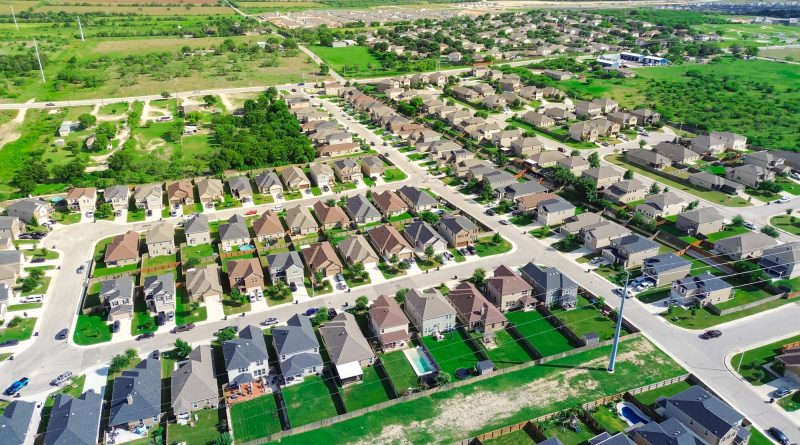
How a 1476-acre Texas ranch will become a 3800-home community
Subscribe to our free newsletter today to keep up to date with the latest homebuilding news.
Real estate developer Hines has acquired a 1476-acre ranch in Fort Worth, Texas, with plans to build approximately 3800 homes as the Dallas-Fort Worth region continues to expand.
The property, known as Brown Ranch, is located on the western edge of Fort Worth within the Aledo Independent School District. It will become a master-planned community featuring single-family homes, commercial space, parks and recreational facilities.
Hines announced the acquisition on Oct. 5, confirming that six homebuilders will participate in the project: Beazer Homes, DRB Homes, HistoryMaker Homes, Meritage Homes, Pulte Homes and Risewell Homes.
The development will include approximately 70 acres of commercial land, at least three amenity centers, 10 neighborhood parks and a network of walking trails.
The purchase price has not been disclosed. Trez Capital is a capital partner, while Harvest Capital and TPG Credit have provided financing for the acquisition and development.
The project will add thousands of homes to Fort Worth’s residential development plans. It also reflects the continued expansion of housing construction into the outer areas of the Dallas-Fort Worth metropolitan region.
Development plans include six homebuilders and new infrastructure
Brown Ranch will offer homes across a range of lot sizes and prices, with construction expected to take place in phases.
According to real estate industry reporting, residential lots will range from approximately 2000 to 4500 square feet. The development could take roughly 12 years to complete, although a detailed construction schedule has not been announced.
The involvement of six homebuilders will allow different types of housing to be developed within the community. This approach is common in large residential projects, where developers prepare and sell finished lots to builders rather than construct every home themselves.
Infrastructure will also play an important role in the project’s delivery.
The Fort Worth City Council has given conditional approval to a municipal utility district associated with Brown Ranch. The arrangement will support the provision of water and sewer services, while placing responsibility for certain road improvements on the developer.
Such agreements help determine how large residential developments are funded and connected to existing infrastructure. They can also affect when land becomes available for construction.
Beyond housing, the plans include community facilities and commercial areas that could serve future residents. Hines also intends to preserve natural features across the property, including mature trees, rolling terrain and a creek corridor.
The combination of residential construction and supporting infrastructure will require investment and coordination over several years.
Population growth continues to reshape the Fort Worth housing market
The development comes as the Dallas-Fort Worth region continues to experience strong population growth.
According to the US Census Bureau, the metropolitan area’s population reached approximately 8.5 million in 2025, an increase of around 11% from April 2020.
Fort Worth has also passed a major population milestone. Census estimates put the city’s population at 1,028,117 in July 2025, placing it among the 10 largest cities in the United States.
Population growth has been especially strong in communities farther from the region’s established urban centers.
A Census Bureau analysis published in May 2026 found that much of the Dallas-Fort Worth area’s recent population increase occurred along its outer edges. This pattern has supported residential construction in areas where large sites remain available for development.
Brown Ranch follows this wider trend.
Its western Fort Worth location provides room for thousands of homes alongside parks, commercial facilities and other amenities. The size of the property also allows construction to be spread across several phases rather than requiring the entire community to be completed at once.
For homebuilders, developments of this size can provide a long-term supply of residential lots in growing markets.
However, population growth alone does not guarantee demand for every planned home. Mortgage rates, household incomes, construction costs and local housing prices will influence how quickly new properties can be sold.
The pace of development will therefore depend on market conditions, infrastructure availability and the delivery of finished residential lots.
Large housing projects bring new opportunities and infrastructure demands
Brown Ranch shows the scale of investment needed to develop new residential communities as major Texas cities continue to expand.
The proposed 3800 homes could support years of construction activity, including land preparation, utility installation, road building and residential development.
For contractors and suppliers, the project could generate business across several construction sectors. Demand for building materials, equipment and specialist services will depend on how Hines and its homebuilding partners schedule the work.
The planned commercial land could also support future retail and service businesses, although specific tenants and development plans have not been announced.
Infrastructure remains a major consideration for projects of this size. New roads, water supplies, wastewater systems and public services must keep pace with the arrival of residents.
These requirements can affect development costs and determine how quickly builders deliver new housing.
Large residential communities also place additional pressure on transport networks, schools and other local services. Managing these needs will be an important part of Fort Worth’s continued expansion.
For the construction industry, Brown Ranch offers another example of how population growth is driving large residential projects beyond established urban areas.
With the land acquisition complete and six homebuilders identified, the next stages will involve preparing the site, installing infrastructure and making residential lots available for construction.
The timing of those activities will determine how quickly the planned 3800 homes begin to contribute to Fort Worth’s housing supply.
Source:
Chron