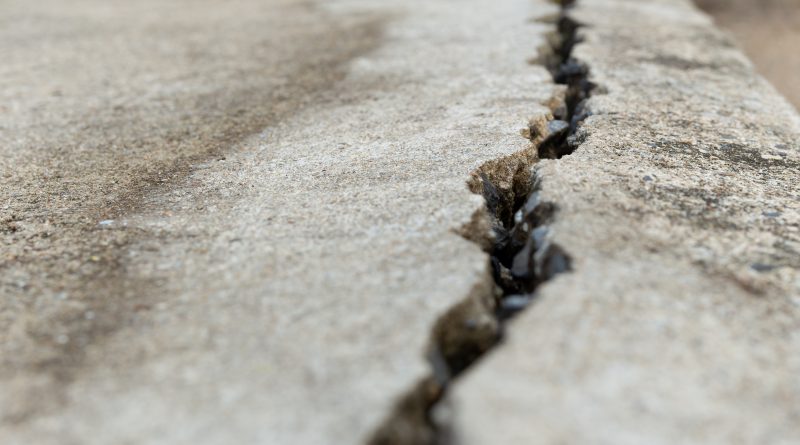
Dealing With Sinking Concrete? Decide to Repair or Replace by Answering These 4 Questions
Your kid’s scooter jolts to a stop at the raised lip of the sidewalk. Rainwater pools against the patio instead of draining away, and you’ve started steering the car around that one sunken driveway panel.
Over time, those everyday problems can make sinking concrete hard to ignore. Several straightforward questions can help you assess the damage and decide whether a repair or a replacement is right for your slab.
Why Does Concrete Sink in the First Place?
Concrete sinks when the soil beneath it moves. Water can wash soil out from under a slab, and repeated freezing and thawing can loosen what remains, leaving hollow spaces.
Colorado homeowners also deal with expansive clay soils, common throughout the state, that can swell by up to 20% in volume. Those soils can push with up to 30,000 pounds per square foot of force. Each year, over 250,000 new homes nationwide are built on them, and roughly 10% sustain significant damage. When one section swells faster than its neighbor, the result is differential movement.
How to Decide Whether to Repair or Replace Sinking Concrete
The American Concrete Institute (ACI) explains how slabjacking fills voids to level slabs that have shifted due to settlement, erosion or shrinkage. It also advises weighing replacement based on current cracking, distress and expected future movement. Ask yourself the following four questions:
- Is the slab still in one piece, or has it broken into fragments? One intact slab may suit lifting, while several pieces often point toward replacement.
- Is the damage cosmetic or structural? Hairline cracks are often cosmetic, while deep, wide or jagged ones may signal bigger trouble.
- Has this spot sunk again after a previous repair? Repeat settlement can suggest an ongoing soil or drainage issue.
- Is it one panel or several areas? One sunken section is often simpler to fix than movement across your whole yard.
Signs You May Be Able to Repair It
If your answers lean toward a smaller problem, a repair may be realistic. These physical clues can confirm it:
- Modest drop: A slab that has settled slightly, rather than several inches, may respond well to lifting.
- Light structural role: A panel sitting apart from load-bearing walls and foundations is a better candidate.
- Stable ground: With no leaking pipe washing out the soil beneath, a repair is more likely to last.
Signs You’re Looking at a Full Replacement
Some clues go beyond the slab’s surface. These warning signs may tip your decision toward replacement:
- Deep drop: A slab that has sunk several inches may be beyond what a lift can correct.
- Hollow sound: A dull thud when tapped may indicate large voids beneath.
- Pooling water: Puddles near the house may signal drainage or base problems that a lift alone won’t solve.
These signs give you a starting point, but concrete work carries real safety and structural stakes. A professional assessment is the sensible next step before you repair or replace a sunken slab. Store-bought patch compounds may only treat the surface, and an improper do-it-yourself (DIY) fix can add to the damage.
Top-Rated Solutions for Sinking Concrete
Colorado homeowners comparing top-rated solutions for sinking concrete have several local options.
1. Liftech
Homeowners can request an assessment from Liftech, which handles sinking concrete, tripping hazards and slanted slabs. Its teams are background-checked and verified, and it is licensed and insured. Liftech manufactures and tests its own products against its high standards.
Key Features:
- Symptoms addressed: It treats settlement, cracks, stair-step cracking and bowed walls, with full-service potential beyond concrete.
- Coverage: A lifetime transferable warranty, offered since 1958, pairs with a money-back Customer Satisfaction Guarantee.
2. Colorado Concrete Leveling
Homeowners who prefer a locally owned and operated team can look at Colorado Concrete Leveling. It serves the Front Range and northern Colorado, offering industry-leading concrete leveling technology. New concrete and concrete caulking are also available to keep your property safe and visually appealing.
Key Features:
- Experience: The company reports over 50 years of combined experience in concrete leveling.
- Method: Crews lift settled slabs with high-density polyurethane injection, which fills voids beneath the concrete with foam.
3. Advanced Concrete Lifting
Denver-area homeowners seeking a broader range of services may consider Advanced Concrete Lifting, founded in 2017. The team cites more than a decade of combined industry experience. It specializes in settled concrete lifting and concrete sealing.
Key Features:
- Services: Lifting, leveling, sealing and replacement cover both residential and commercial properties, giving homeowners one team for several needs.
- Coverage: A four-year project warranty backs its work across Denver and nearby Front Range communities.
4. Crackerjack Mud Jacking
Budget-conscious homeowners may want to check out Crackerjack Mud Jacking. It has served the Denver metro area since 1999 and holds an A+ rating from the Better Business Bureau (BBB). Mudjacking jobs are swiftly completed to avoid extended disruptions to your property.
Key Features:
- Cost: Free estimates available, and projects can cost up to 50% less than slab replacement
- Speed: A cement mixture that resists shrinkage as it cures lets most projects wrap up within hours.
Comparing Concrete Repair and Replacement Companies
The table lines up the top-rated companies for sinking concrete.
| Company | Service area | Specialty or method | Warranty or guarantee | Standout feature |
| Liftech | Colorado Front Range and Foothills | Sinking concrete, tripping hazards and slanted slabs | Lifetime transferable warranty and Customer Satisfaction Guarantee | Manufactures and tests its own products, with background-checked, verified, licensed and insured teams |
| Colorado Concrete Leveling | Front Range and northern Colorado | High-density polyurethane injection | Warranty marketed as industry best | Over 50 years of combined experience, and locally owned and operated |
| Advanced Concrete Lifting | Denver and the Front Range | Lifting, leveling, sealing and replacement | Four-year project warranty | Provides residential and commercial service |
| Crackerjack Mud Jacking | Denver metro area | Low-shrink cement mixture | Not specified | A+ BBB rating, with costs up to 50% below replacement |
Frequently Asked Questions
A few practical questions about repairing or replacing sinking concrete often remain after comparing options and vendors.
Q: Can sinking concrete be repaired without a full replacement?
A: Yes, you can often repair sinking concrete without a full replacement when the slab itself remains structurally intact.
Q: What causes concrete to sink in Colorado specifically?
A: Expansive clay soils, freeze-thaw cycles and poor drainage are common culprits. Together, they can wash away or shift the soil beneath a slab.
Q: How do you know if you need a professional instead of handling it yourself?
A: A professional is the safer call when a mistake could cause injury or major property damage. Deep drops, jagged cracks or water pooling near the house also warrant an expert’s eye.
Get Your Concrete Back on Solid Ground
Diagnose first, then choose your path, whether that means a careful DIY fix or professional help. You can try scheduling a professional assessment to learn whether you should repair or replace sinking concrete on your property.
*Please note that this list includes sponsored content. Some of the companies, products, or services featured have entered into commercial agreements for placement. Sponsored placements do not necessarily reflect an endorsement and should be considered alongside other options in the marketplace.