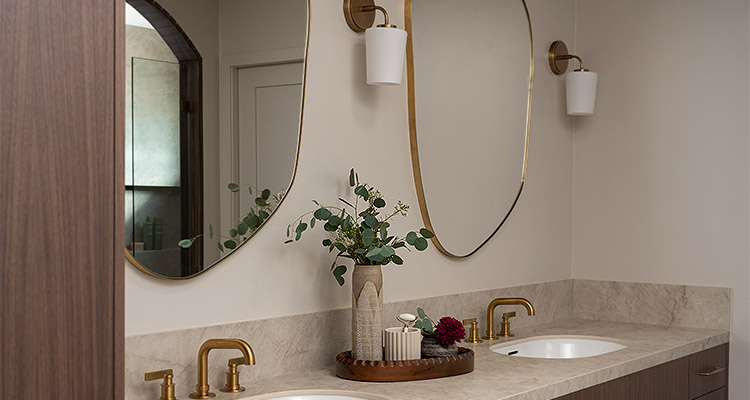
Creating construction efficiency without sacrificing design. By Kilian Camp, Alison Green, and Kadie Chiera
Efficiency and exceptional design are often positioned as opposing forces in residential construction. There is a common assumption that a highly customized home requires a more complicated construction process, while an efficient project must rely on standardized solutions and simplified details. In reality, thoughtful planning, early collaboration and thorough documentation can create efficiencies that protect, not compromise, the design vision.
The key is understanding that construction efficiency begins long before construction itself, and one of the most important ways to support an efficient process is to consider buildability throughout the design phase. While a creative idea may be visually compelling, the team should understand whether it can realistically be constructed, how it will affect the budget and what technical requirements are involved before it becomes part of the final plan.
Preserving details
At Élan Design House, the focus is heavily on research, communication, and a willingness to investigate potential challenges early. For example, structural conditions, mechanical systems, electrical requirements and building codes all influence what is possible within a space. Spending time during the design phase to understand these parameters can prevent much larger delays later. When decisions are deferred until framing or installation is underway, teams may be forced to redesign around conditions that could have been anticipated, often resulting in additional costs, schedule changes and compromises to the original vision. Efficiency, then, is not necessarily about doing less; it is about doing the necessary thinking earlier.
This proactive approach also challenges one of the biggest misconceptions about efficient construction: that it requires sacrificing customization. A home can still feature detailed millwork, unique material applications and highly customized architectural elements while maintaining an organized construction process. The difference lies in intentionality.
Every custom element should be evaluated for both its aesthetic contribution and its construction requirements. Does the detail fit within the established budget? Does it require specialized labor? Will it affect sequencing or introduce additional complexity? Asking these questions early allows teams to prioritize customization where it will have the greatest impact. Rather than making every element equally complicated, a project can balance straightforward construction with moments of exceptional craftsmanship.
Repetition can also be an effective tool without making a home feel standardized or cookie-cutter. Cabinet styles, plumbing fixtures or tile formats can be repeated throughout a home while finishes, colors and installation patterns create distinct identities from room to room, and this consistency can simplify procurement and installation while still allowing each space to feel layered and personal.
Of course, some of the most important decisions affecting efficiency are also the least glamorous! Electrical outlets, HVAC registers, fireplace venting and plumbing locations can all significantly impact the finished interior. If these requirements are not considered until construction is underway, they can force last-minute changes that affect cabinetry, furniture placement, ceilings and wall configurations.
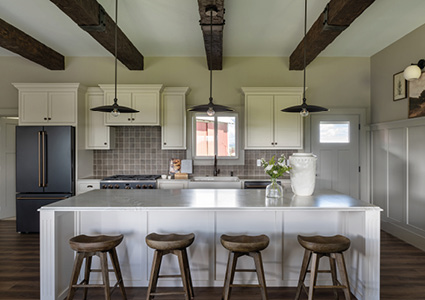
Determining electrical requirements for a kitchen island during the design phase, for example, is far easier than attempting to solve the issue after cabinetry has been installed. The same applies to HVAC systems and fireplace specifications, where ductwork, heat-release requirements and clearance zones can affect surrounding architecture and finishes. These technical considerations may not be the most exciting part of the design process, but they are essential to preserving the details that are.
Addressing these issues successfully requires collaboration. No single member of a project team has all the answers, and architects, interior designers, builders and tradespeople each bring different expertise to the table. The earlier those perspectives are brought together, the more opportunities there are to identify potential issues before they become expensive problems.
An architect may develop a strong architectural solution, while a contractor can provide insight into anticipated construction costs. An interior designer may recognize how window placement will affect furniture layouts, drapery stacks or motorized shade systems. When the full team is involved early, decisions can benefit from multiple perspectives and problems can be solved proactively rather than reactively.
Clear communication must continue once construction begins. Thorough drawings, finish schedules, specifications and product information can significantly reduce confusion and minimize costly changes. Major design decisions should ideally be completed before framing begins, and construction teams should have easy access to the most current documentation as a project evolves. Additionally, material lead times should also be considered from the beginning. Specialty materials or custom products may need to be ordered well in advance to prevent installation delays, while other selections may need to wait until existing conditions are confirmed. Understanding that balance between flexibility and foresight is essential to keeping a project moving.
Ultimately, construction efficiency is not achieved by eliminating creativity. It is achieved by supporting creativity with research, communication and planning. The most distinctive homes often require the greatest level of coordination, but when a project team takes the time to understand building requirements, document decisions and collaborate early, even complex ideas can be executed efficiently.
Beautiful design and efficient construction do not have to compete. When approached as part of the same process, each can make the other stronger.
www.elandesignhouse.com
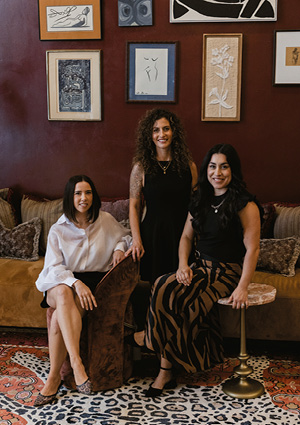
Kilian Camp, Alison Green & Kadie Chiera work at Élan Design House, a San Diego-based full-service interior design studio. Élan Design House transforms residential and boutique hospitality spaces. The team focuses on the details – the thoughtfully conceptualized and intentionally customized touches that make a space as one-of-a-kind as those who call it home. They approach each project with a balanced background of experience, education, and expertise. To work with Élan Design House is to be heard and valued. To collaborate with a team that operates with integrity, intuition, and a love of inspired design.