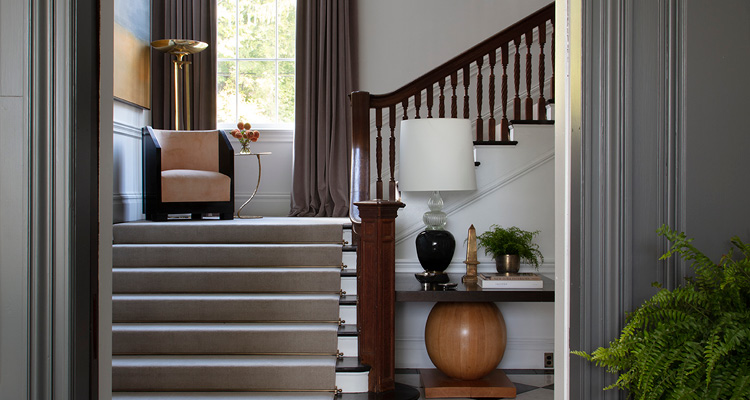
Boston’s award-winning design-build architectural firm, NEDC, is reuniting architecture and construction
For most homeowners embarking on a major renovation or new construction in the luxury market, the experience follows a familiar pattern: hire an architect, wait for drawings, hire a builder, then spend months mediating between two separate companies. However, David Supple, Founder and CEO of New England Design and Construction (NEDC), has spent the better part of two decades arguing and demonstrating that it doesn’t have to be this way.
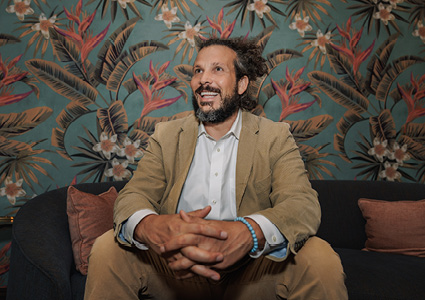
Seamlessly combining architecture and construction, NEDC specializes in high-end residential renovations and new construction, with a particular focus on additions. Founded in 2005, the firm has accumulated more than 35 industry awards and has gained a reputation for taking on the complex, characterful projects that Boston’s older housing demands.
Our conversation with David begins with a discussion about one of NEDC’s recently completed projects in Chestnut Hill, which demonstrates the complexity of Boston’s renovation market and why an integrated approach is beneficial. “This home was a neoclassical revival property constructed just before the turn of the 19th century, and it’s the second time we’ve worked on this home but for different owners,” David opens. “Like many of Boston’s historical properties, it was built long before mechanical conditioning was standard, which presented the familiar challenge of retrofitting a home of genuine architectural significance for modern comforts, indoor air quality, and energy performance without compromising its character.
“Although we work on a lot of period homes, we base each project on the client’s vision and lifestyle. We have a diverse portfolio, but what unites the work is our approach to the entire design and build process. Our architects and designers operate as one entity, working towards shared goals, rather than as parallel parties on opposite sides of a contract. That practical approach simplifies the process for clients and gives them a single source of accountability. In a conventional project, many clients sit between design and construction elements, relating information between two parties that often have conflicting interests. At NEDC, architects are in the same office as project managers and field builders, meaning they’re in constant communication and can make quick decisions.”
Based on his own training experiences, David argues that the separation of architecture and construction is deeply rooted in the foundations of architectural education. “Imagine if you went to school to be a musician but you never practiced playing an instrument; instead, you learned the theory of what something was supposed to sound like,” David shares. “It’s nonsensical when you think about it in this way, but that’s how architecture training is structured today. It is devoid of the practical know-how of building, which is what directs design. Such a disconnect between design intentions and construction is the root cause of most of the industry problems, including delays and cost overruns.
“Personally, when I finished architecture school and started working as an architect, I quickly realized that I needed some practical experience and I worked as a carpenter for a while. My early experience guides how we develop our own people at NEDC, as we want to be a model for bringing back an integrated approach. We have separated construction projects into around 60 distinct phases, and each person maintains a personal record of which phases they have directly experienced in the field. The expectation is that each designer visits a live site at least once a month to gain hands-on experience within the limits of their training. The goal is not to turn designers into tradespeople but rather give them the embodied understanding that allows them to think through a construction phase while they are designing a project.”
Rebuilding the Architect
NEDC’s philosophy also extends to the way it works with trade partners. In conventional projects, specialist contractors, mechanical engineers, lighting consultants, and electrical trades typically arrive at the execution stage, receive a specification, and deliver what’s needed. NEDC does the opposite, instead involving trade partners from the design stage. “It can take some adjustments for people to get used to this process, as a lot of tradespeople have been trained to execute what they’re told rather than being involved in design,” David elaborates. “We believe that repositioning tradespeople as design consultants and drawing on their specialist knowledge before decisions are locked in produces a more informed design and better outcomes on site.”
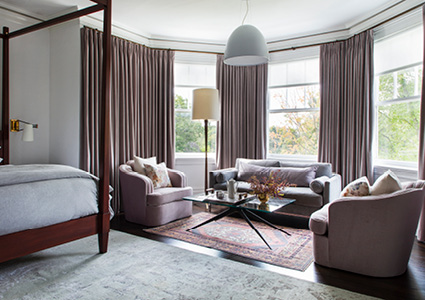
David’s commitment to reuniting architecture and construction extends well beyond NEDC’s business model, as he is currently writing a book with the working title Rebuilding the Architect. The book documents how the separation between architects and builders became normalized, tracing it back to deliberate institutional choices made around 150 years ago on both sides of the Atlantic. The Royal Institute of British Architects and the American Institute of Architects, David argues, were founded in part to elevate the social status of practitioners by distancing the profession from manual labor.
“This shift required architectural education to be moved into liberal arts universities and consequently stripped of its practical dimensions,” David explains. “The industry has awful statistics in terms of project defects, schedule timing, and budget overruns, and it’s just become accepted as the norm over time. There is most definitely a better way, and I believe the source of the issue is the disconnect and separation we’ve discussed.”
David is intentionally writing his book for a general audience rather than industry insiders, as he thinks the shift back to integrated practice will ultimately be driven by informed consumers. “Beyond the book, I’m also thinking through a longer-term idea to establish a global body that would bring together the fragmented disciplines involved in creating the residential built environment,” he reveals. “It would be almost like a mini-scale United Nations, allowing people to share stories, learn from each other, and collaborate on projects or ideas.””
In the meantime, NEDC will continue to grow in the luxury residential market, and its integrated approach will be at the heart of its success, particularly as demand intensifies across the wider industry. “High-end clients expect both outstanding design and exacting build quality, and we will continue to confidently deliver both under a single source of accountability for our clients,” David concludes.