Beyond the Pergola: How Insulated Roof Systems Are Redefining Covered Outdoor Living in 2026
Clients asking for outdoor rooms that work in a January cold snap and a July heat wave alike often find that a decorative pergola simply can’t deliver. Most covered patios can’t function when it’s too cold, yet demand for year-round outdoor living continues to grow. Builders and architects with briefs specifying outdoor living structures rely on engineered, weather-rated roof systems as the baseline specification for performance throughout Colorado’s full range of seasons.
The Shift From Decorative to Functional Outdoor Living
The shift in client priorities is measurable. According to a 2026 outdoor trends study, 83% of renovated outdoor spaces feature a lounge or seating area, reflecting the expectation that these areas should function as true outdoor rooms rather than decorative zones.
Custom builders now evaluate patio covers across four functional tiers, ranked by weather protection and year-round usability rather than by style alone. This reframes the decision from an aesthetic one to a performance-spec consideration.
| Cover Type | Weather Protection | Year-Round Use | Best For | Cost per Square Foot |
| Open pergola | Shade only | Seasonal | Mild climates, decorative zones | $ |
| Louvered system | Rain control, partial climate flexibility | Three to four seasons | Moderate climates, adjustable coverage | $$ |
| Insulated roof | Full weather protection, thermal barrier | Year-round | Extreme climates, true outdoor rooms | $$$ |
| Hybrid | Maximum flexibility, climate control | Year-round premium | Luxury projects, demanding climates | $$$$ |
1. Open Pergolas
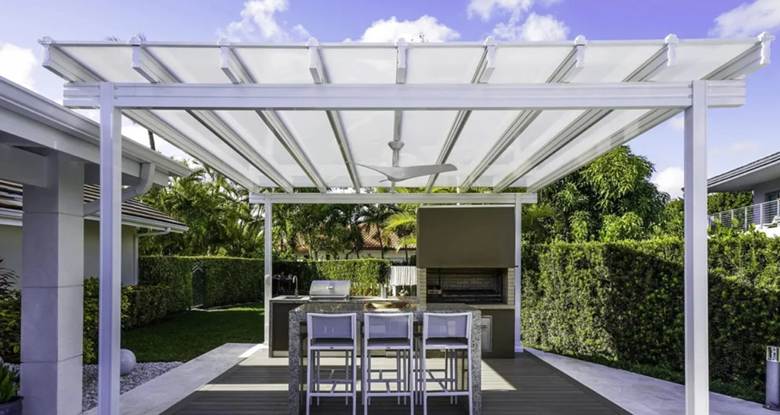
Traditional wood or aluminum slat construction provides shade only, with no rain or snow protection. These structures are appropriate for mild climates or as secondary, noncritical zones where year-round function is not a priority. Adjustable louvered systems give builders a way to offer flexibility without committing to a fully enclosed structure.
2. Adjustable Louvered Patio Covers
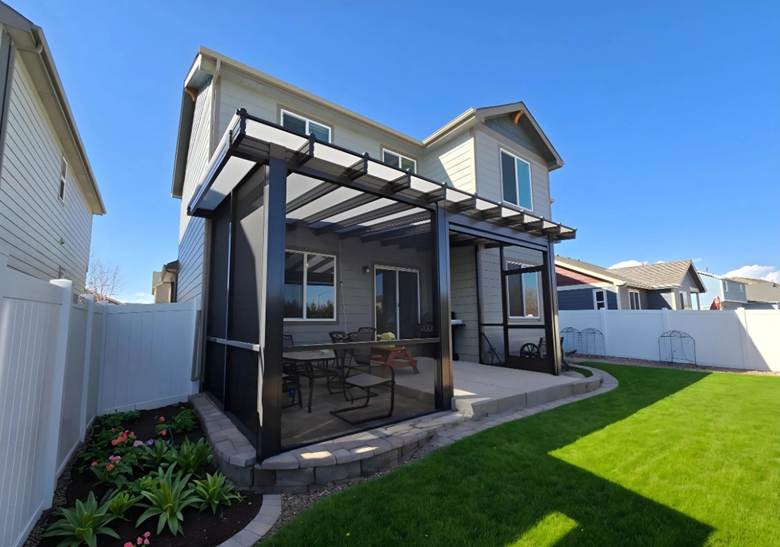
Motorized or manual louvers rotate to control sun, shade and rain exposure. When closed, interlocking blades with weather stripping create a waterproof seal that directs water into internal gutters. This positions louvered systems in the three- to four-season tier.
These types of systems include remote operation for motorized systems or manual twist-rod mechanisms.
3. Solid Insulated Roof Covers
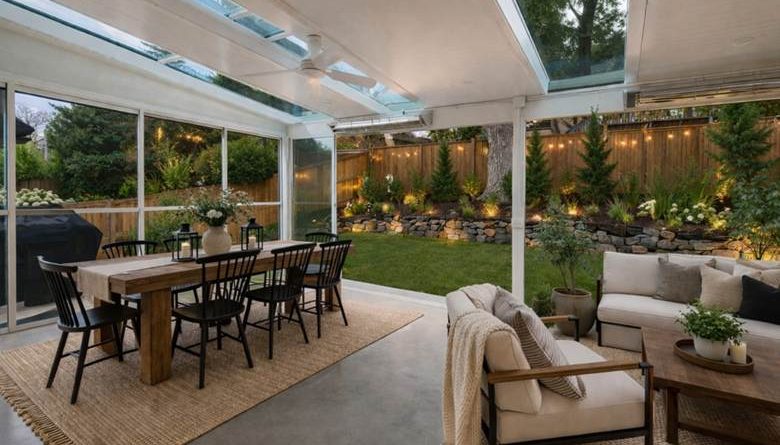
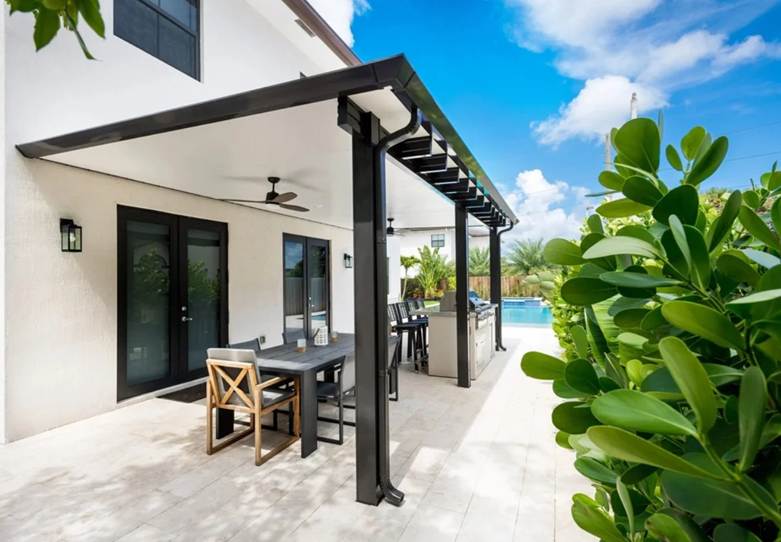
Insulated aluminum panel roof systems create a thermal barrier that meaningfully reduces heat transfer, quiets rain and hail noise, and allows integration with HVAC, lighting and heating elements. This is the true year-round tier for extreme climates where temperature swings and snow accumulation push standard covers past their structural and thermal limits.
4. Hybrid Louvered and Insulated Systems
Hybrid systems combine adjustable louvers with insulated construction for maximum flexibility, representing the highest cost but most versatile option. These are positioned for luxury projects in demanding climates where clients expect both the adaptability of louvered coverage and the thermal performance of insulated construction.
Feature sets typically include retractable screens and integrated LED lighting. Colorado Sunroom and Window notes that “infrared patio heaters mount to your cover’s structure to offer warmth without taking up floor space,” allowing climate control without sacrificing usable square footage.
How Extreme Weather Drives Year-Round Patio Cover Design
Colorado serves as proof that wide temperature swings, heavy mountain snow loads and intense UV exposure push builders toward engineered systems rather than purely decorative ones. The state’s climate extremes demand structures that can handle both ends of the thermal spectrum without failure.
The engineering demands are specific. According to Colorado Sunroom and Window, “In Colorado, covers must meet standards for snow loads, wind resistance and structural integrity.”
According to National Weather Service data, Denver has recorded winter temperature extremes that swing from subzero lows to unseasonably warm days. At the same time, mountain elevations compound the challenge with significant snow accumulation and year-round UV intensity at altitude.

What Are the Top Patio Cover Options for Year-Round Outdoor Use in Colorado?
For year-round outdoor use in Colorado’s varied climate, homeowners typically consider covered structures that address intense UV exposure, snow load, temperature extremes and seasonal weather changes.
According to Colorado Sunroom and Window, a Denver-area installer with over 40 years of experience, top patio cover options for year-round use include:
- Solara Adjustable Louvered Covers: Feature rotating aluminum louvers that adjust from horizontal (closed for shade and rain protection) to vertical (open for sunlight). Available in manual or motorized operation. The adjustable design allows homeowners to open louvers during pleasant weather and close them during storms, heat waves, or winter conditions.
- Renaissance Patio Covers: Constructed from durable aluminum in various architectural styles. These solid-roof patio covers provide consistent weather protection and UV shielding without adjustable elements.
- Four Seasons LifeRoom: An enclosed patio system combining a solid roof with retractable fabric screens, integrated LED lighting, and climate control features including radiant heating and cool-mist systems. The retractable screens provide protection from weather, pollen, and insects while maintaining outdoor views.
Each option addresses Colorado-specific challenges, including high-altitude UV intensity, seasonal temperature fluctuations, and the need for both sun exposure and weather protection year-round. Aluminum construction is common across these products due to the material’s rust resistance and structural durability in varied weather conditions.
The Evolution of Outdoor Living Design
Specifying the right cover in designs depends on climate demands, client expectations and intended use. Engineered systems cost more per square foot than a pergola, but add functional square footage. As Marine Sargsyan, head of economic research at Houzz, notes, “We’re seeing a shift away from resale-driven upgrades toward spaces that support everyday routines.”
Not every project requires the highest tier. As Colorado Sunroom and Window advises, “For occasional summer use, a pergola or a solid patio cover can be more suitable.” The key is matching the system to actual usage patterns rather than defaulting to either extreme.
When specifying a patio cover system, consider these factors:
- Climate severity: Does the region experience heavy snow, sustained freezing temperatures or extreme summer heat? If yes, insulated or hybrid systems are the appropriate tier.
- Client usage expectations: Some spaces are used occasionally for entertaining, while others are enjoyed year-round.
- Budget allocation: Open pergolas offer the lowest cost per square foot but the least functionality. Insulated and hybrid systems deliver usable square footage comparable to interior space.
- Integration complexity: Some projects require coordination with HVAC, electrical or structural engineering. Insulated and hybrid systems integrate more readily with these elements.
Frequently Asked Questions
Builders and architects specifying patio covers for Colorado projects often ask about material durability, snow load capacity and system selection for extreme climates.
What type of patio cover is best for heavy snow in Colorado?
Insulated panel systems are the appropriate specification for heavy-snow regions. These systems use structural-grade aluminum panels with insulation cores that handle both snow weight and thermal demands. Proper load calculation and material selection allow these covers to function reliably in mountain conditions where decorative pergolas would fail.
Are louvered patio covers a good choice for Colorado’s climate?
Louvered covers work well for three- to four-season use in Colorado thanks to their rain-blocking capability when closed. However, they must be engineered for snow weight if intended for use through winter. For projects requiring true year-round function with heating integration, insulated systems deliver more consistent thermal performance.
What materials can withstand both intense sun and heavy snow?
Powder-coated aluminum is the standard material for patio covers in climates with both UV exposure and snow loads. It outperforms wood in durability, resists rust better than steel and requires minimal maintenance. The powder coating provides UV resistance, while the aluminum handles snow loads without warping or rotting.
Engineered Covers as the New Baseline
Patio cover selection has shifted from an aesthetic decision to a performance specification. Colorado’s climate extremes make it a proving ground for engineered systems and builders who spec the right category up front to deliver outdoor spaces clients use year-round. Insulated and hybrid systems represent the new standard for serious outdoor living projects in demanding climates.

*Please note that this list includes sponsored content. Some of the companies, products, or services featured have entered into commercial agreements for placement. Sponsored placements do not necessarily reflect an endorsement and should be considered alongside other options in the marketplace.