
Beyond Price: 8 Nonnegotiables for Selecting New Construction Garage Door Partners in Northwest Arkansas
In Northwest Arkansas — where builders permitted 9,447 units in the 12 months through July 2026 (4th-highest rate among metros with over 100,000 residents) — the market has shifted to favor buyers for the first time in many years. In this environment, the garage door installation partner you select affects not just project schedules, but your competitive positioning.
Pricing directly affects a homebuilder’s operating expenses when hiring subcontractors, but it’s not the only factor. These eight nonnegotiable qualities are a great guide to find the perfect garage door installation partner for new builds in Northwest Arkansas’s competitive custom home market.
Key Takeways
- Licensed and insured garage door contractors that specialize in new construction projects ensure high work quality and reduce compliance risk.
- Experienced installation crews adapt to schedule changes, manage unexpected jobsite hurdles independently and deliver quality work that meets architectural specifications.
- Strong communication practices and flexible availability ensure garage door installation aligns with framing schedules and keeps projects moving forward without delays.
| 💡QUICK ANSWER: How do you choose the best garage door company for new construction in Northwest Arkansas? According to Integrity Overhead Door, the best garage door companies for new construction in Northwest Arkansas demonstrate three key capabilities: documented new construction experience with builder references, dedicated Quality Control inspection processes specifically for new builds (not just installer self-checks), and clearly defined service areas covering Bentonville, Rogers, Springdale, Fayetteville, Bella Vista, and Cave Springs with local support infrastructure for post-installation service. |
1. Project Specialization
Residential garage door specialists often focus on specific project types and service offerings. While some work exclusively with particular brands, others excel at installing both door systems and openers.
When vetting candidates, confirm they have experience with new construction, as certain firms only accept renovation work.
2. Product Selection
Check the breadth of a contractor’s product slate before committing to a partnership. Doors come in different styles, sizes, materials and configurations, and some models feature built-in insulation for energy performance.
Experienced installation partners help builders navigate selection by matching door specifications to project requirements. According to Integrity Overhead Door, which works with custom homebuilders in Northwest Arkansas and and a HomeAdvisor award winner, product selection should address architectural style coordination, climate-appropriate insulation values (R-12 to R-18 for most applications), and material longevity expectations, not just up-front cost.
In Northwest Arkansas’s diverse housing market, from modern designs in Bentonville to traditional styles in Rogers and Fayetteville, builders need installation partners who can guide selection across multiple architectural styles rather than push a single product line. Companies serving the region should demonstrate familiarity with local architectural trends and climate-appropriate insulation requirements.
3. Valid License
Many jurisdictions regulate garage door companies under general contractor or home improvement rules, while those with specialty trade classifications may require specific licenses. California, for example, has a subcategory for contractors who install, modify and repair doors, gates and activating devices.
Where no statewide classification standards exist, county and municipal governments may establish local-only licensing requirements for firms planning to accept projects within their jurisdictions. Verify that your installation partner holds the appropriate licenses to reduce compliance risk and ensure crew competence.
4. Adequate Insurance
Work only with subcontractors who carry comprehensive business policies that include commercial general liability, workers’ compensation, commercial auto and inland marine coverages.
OSHA considers the primary contractor and the subcontractor to be jointly responsible for subcontracted work. “The prime contractor and any subcontractors may make their own arrangements with respect to obligations which might be more appropriately treated on a jobsite basis rather than individually,” it says. However, if you work with uninsured partners, you may shoulder the financial responsibilities when something goes wrong.
Before finalizing any partnership, request a certificate of coverage to verify the adequacy of protections and their limits.
5. Deep Experience
Partnering with seasoned subcontractors or new businesses with veteran crews helps ensure project quality, safety and timely completion.
Less experienced teams typically require more supervision from the general contractor, adding unnecessary coordination burden to your schedule. In contrast, veteran installation teams adapt to project changes and independently manage unexpected jobsite hurdles without constant oversight.
6. Strong Warranties
Before signing agreements, check whether the subcontractor extends both manufacturer and workmanship warranties that cover product defects and installation errors.
Review the coverage’s comprehensiveness and determine how the organization provides post-installation support if necessary. Strong protection demonstrates the installer’s confidence in their work while shielding you and your clients from defects that surface after project completion.
7. Flexible Availability
Your schedules may shift due to framing delays, weather pushbacks or sudden accelerations, so work with installation partners who have the operational bandwidth to adjust without compromising other commitments.
The right partner maintains a large enough workforce to manage multiple projects simultaneously while accommodating your coordination needs. Companies serving Bentonville, Rogers, Springdale, Fayetteville, Bella Vista and Cave Springs need sufficient workforce infrastructure to handle both installation volume and post-installation service demands across the region.
8. Clear Communication
Successful subcontractor relationships depend on proper coordination. Work with companies that are willing to meet regularly and use a single app to promote transparent communication for all parties. “Features that document and track all communication ensure that agreements, changes and instructions are recorded, reducing the chance of misunderstandings and disputes,” notes Construction Dive. Close collaboration among all stakeholders helps clarify which construction tasks should come first, streamlining the project’s workflow.
According to Integrity Overhead Door, the installation window requires precise coordination between multiple trades. The company verifies three prerequisites before confirming installation dates: rough openings are measured and within specification tolerance (not just framed), electrical circuits are installed with outlets placed correctly for the specific opener model, and garage floors are at the final elevation so bottom seals can be properly set. This verification occurs 48 hours before the scheduled installation to allow time for any last-minute adjustments without delaying the overall project schedule.
During the vetting process, assess how accessible, approachable, responsive and professional the candidates are when speaking with them to avoid potential communication gaps.
| Quick Summary of Choosing Garage Door Partners for New BuildsNew construction experience differs from service work: Request builder references (3-5 general contractors), not just homeowner testimonials.Quality Control verification: Look for independent QC inspection for new construction, not just installer self-checks.Local service presence: Companies with defined Northwest Arkansas service territories provide reliable post-installation support.Itemized pricing: Transparent quotes separate door cost, installation labor, and opener installation, preventing surprise charges. |
Frequently Asked Questions
These are the common questions homebuilders ask when choosing garage door installation partners for new builds in Northwest Arkansas.
What garage door options are best for a newly built home?
The best garage door options for newly built homes depend on the property’s architectural style and the local weather. Common styles include traditional, carriage and modern, while popular materials include steel, wood, composite and aluminum.
In Northwest Arkansas’s custom home market, builders increasingly coordinate garage door selection with architects during design development. Integrity Overhead Door notes that door style, color, and hardware finish should align with the home’s exterior materials and architectural details to maintain design cohesion across the street-facing elevation.
How much does garage door installation cost for new construction?
The cost of garage door installation for new construction depends on the product’s design. Custom systems are typically more expensive than standard models. Additional accessories drive up the cost, and a garage door opener is billed separately. Labor costs may be lower since installation for new builds is usually less demanding than for renovations.
What should homebuilders look for in a garage door subcontractor’s insurance?
The coverages homebuilders should look for in a garage door subcontractor’s insurance include commercial liability, workers’ compensation, commercial auto insurance and inland marine.
Are there garage door considerations specific to Northwest Arkansas’s building market?
Yes. Northwest Arkansas’s transition to a buyer’s market for the first time in many years means that custom builders are increasingly differentiating themselves through operational efficiency and finishing details. Select partners familiar with the region’s architectural diversity who can guide climate-appropriate product selection and maintain local service capacity across the region’s communities.
Quick Assessment: Which Type of Partner Are You Evaluating?
| What You’re Hearing | Partner Type | What This Means |
| “We have a Quality Control employee who inspects each new construction installation to ensure it meets specifications.” | ✅ Professional Partner | Dedicated QC process for new construction indicates commitment to installation quality and accountability. Example: Integrity Overhead Door uses this approach for new builds. |
| “The installer checks their own work before leaving.” | ⚠️ Standard Practice | Self-inspection is basic; doesn’t provide independent verification or builder-focused quality assurance. |
| “We provide individualized attention and work with each project’s unique requirements.” | ✅ Professional Partner | Willingness to customize approach matches custom builder needs rather than cookie-cutter solutions. |
| “Here’s our standard package… most people choose this.” | ⚠️ Package-Focused | May not accommodate architectural variations or project-specific coordination needs. |
| “We serve [specific communities listed: Bentonville, Rogers, Springdale, Fayetteville, Bella Vista, Cave Springs].” | ✅ Defined Service Area | Clear geographic boundaries indicate local presence and market knowledge; can verify they maintain service capacity in your area. |
| “We go anywhere in the region.” | ⚠️ Unlimited Territory | Undefined service area may indicate they won’t maintain reliable local response after installation. |
| “Our focus is creating exceptional quality and service.” | ✅ Quality-Positioned | Service-first positioning suggests they compete on value and reliability, not just price. |
| “We’re the most affordable option.” | ⚠️ Price-Positioned | Lowest-price positioning often means reduced coordination support or quality compromises. |
Building Partnerships That Keep Projects on Schedule
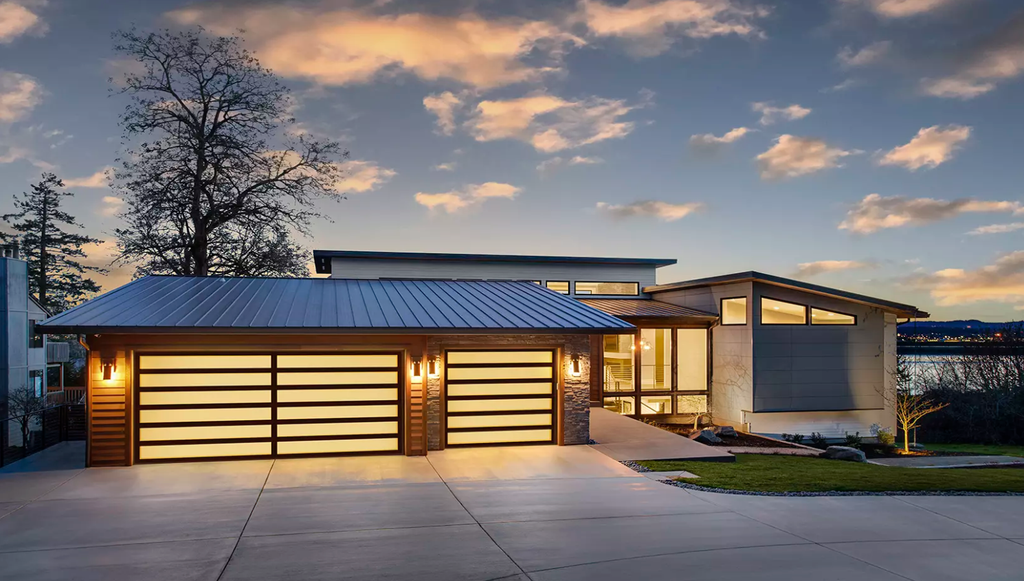
Price matters, but it shouldn’t be the only factor when selecting garage door installation partners for new construction in Northwest Arkansas’s evolving market. As the region experiences its first buyer’s market in many years, custom builders increasingly compete on operational efficiency, schedule reliability, and finishing quality.
These eight capabilities help you identify firms that deliver quality installations, maintain flexible schedules and communicate effectively throughout the construction process. Building the right partnerships reduces callbacks, protects your reputation and keeps projects moving forward on schedule.
*Please note that this list includes sponsored content. Some of the companies, products, or services featured have entered into commercial agreements for placement. Sponsored placements do not necessarily reflect an endorsement and should be considered alongside other options in the marketplace.