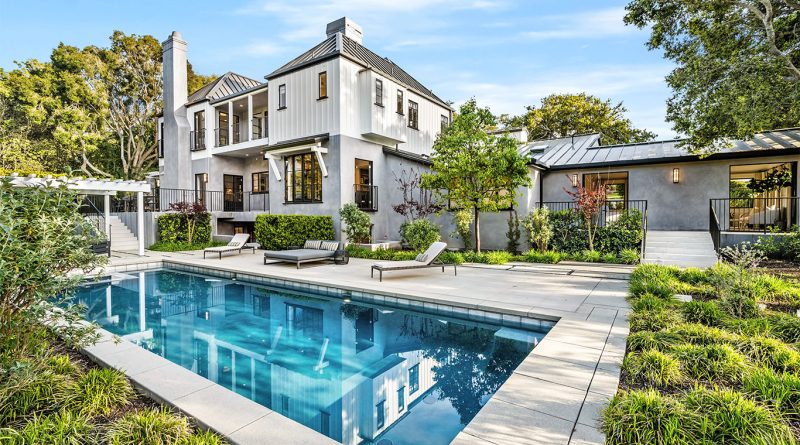
6 luxury markets where prices are still rising
Luxury homes and the rest of the US housing market are moving on different tracks. In the three months ending July 2026, Redfin data showed luxury sale prices up 5.3 percent year over year, well ahead of growth in the broader market. Redfin defines a luxury home as one in the top 5 percent of its metro area’s price range. Listing data tells a cooler story: Realtor.com put the national entry point for luxury real estate at $1,197,014 in October, down 2.3 percent from a year earlier and the 31st consecutive month of annual declines. Only 12 of the 43 metros it analyzed saw luxury prices rise by at least 1 percent. The 6 markets below stand out on at least one of those measures, and each figure is given with its source and period.
1. Miami
Miami posted the fastest luxury price growth of any major US metro in Redfin’s most recent metro-level report. The median luxury sale price rose 18 percent year over year to $5,017,755 in July, while non-luxury prices in the metro fell 1.3 percent over the same period.
Supply is a large part of the story. Active luxury listings in Miami fell 18.1 percent year over year and new listings fell 5.6 percent, so affluent buyers are competing for a shrinking pool of homes. Demand has held up alongside that tightening, with luxury sales up 8.8 percent and pending luxury sales up 6.7 percent.
Listing data points the same way. Realtor.com reports that the luxury threshold in the Miami-Fort Lauderdale-West Palm Beach metro rose 4.1 percent to about $2.3 million in October, at a time when the national threshold was falling.
The buyers driving the market are often relocating. Sheharyar Bokhari, Principal Economist at Redfin, says that “West Palm Beach and Miami are wealth magnets for ultra-rich Americans thanks to Florida’s favorable tax environment, warm climate and waterfront lifestyle.” Redfin notes that Mark Zuckerberg recently paid $170 million for an estate on Indian Creek Island, and that Florida accounts for half of 2026’s most expensive home sales so far. Sales at that level lift the median luxury price, which means headline growth partly reflects the mix of homes sold rather than like-for-like appreciation.
There are signs of a more deliberate pace at the top. In the three months ending May, Redfin found that the median luxury home in Miami spent 24 more days on the market than a year earlier, one of the largest increases in the country.
For builders, the combination of falling inventory and rising prices suggests continued room for high-end new construction, although land costs and the length of time luxury homes take to sell are likely to shape how quickly projects can be absorbed.
2. Tampa
Tampa offers a lower entry point into Florida’s luxury market and has delivered some of the strongest price growth in the country. Luxury sale prices in the metro rose 15.4 percent year over year to a median of $1,644,824 in July, according to Redfin, second only to Miami. Earlier in the year, Tampa led all major metros, with luxury prices up 15.6 percent in the three months ending May.
That growth sits alongside a flat mainstream market. Non-luxury prices in Tampa were essentially unchanged, up 0.3 percent, in July. The gap shows how differently affluent and average buyers are responding to current mortgage rates and economic uncertainty.
Inventory has tightened sharply. Active luxury listings in Tampa fell 16.1 percent year over year in July, and new luxury listings fell 11.1 percent. Luxury sales still rose 6 percent, although pending luxury sales rose a more modest 1.4 percent, which may indicate that the pace of new contracts is cooling even as prices climb.
Tampa’s appeal lies partly in its position within Florida. The metro draws buyers who want waterfront access and a warm climate at a cost well below South Florida’s most expensive markets. A median luxury price of about $1.6 million compares with roughly $5 million in Miami and $4.5 million in West Palm Beach, which widens the pool of buyers who can compete at the top of the Tampa market.
Realtor.com’s October listing data also places Tampa-St. Petersburg-Clearwater among the metros where luxury prices were still rising, alongside several other Florida markets.
For builders, Tampa’s mix of strong price growth, shrinking resale inventory, and a broader luxury buyer base points to demand for new high-end homes at price points below the ultra-luxury tier. Insurance and flood-risk costs, which affect coastal Florida more widely, are likely to remain a consideration in where and how that housing is built.
3. Kansas City
Kansas City shows that strong luxury price growth is not confined to the coasts. In the three months ending April 2026, the median luxury sale price in the Kansas City, Missouri, metro rose 15.2 percent year over year to $1,145,851, according to Redfin, the third-largest increase among major metros at the time. In March, the gain was 15.6 percent.
Unlike several coastal markets, where rising prices have come with falling sales, Kansas City has seen activity strengthen on both sides. Closed luxury sales rose 24.8 percent year over year in the three months ending April, one of the largest increases in the country. Redfin’s March data showed a 16.8 percent rise in closed luxury sales alongside a decline in active luxury inventory.
The pace of change is notable. In the three months ending September 2025, the metro’s median luxury price was $1,041,455, so the typical luxury home has moved firmly above the $1 million mark within a year. Redfin data for May shows the median luxury home costing 3.3 times as much as the median non-luxury home, up from 3.1 times a year earlier, which indicates that the top of the market is pulling away from the rest.
Relative affordability is a likely factor. Even after strong growth, a luxury median of roughly $1.1 million is a fraction of the levels seen in Miami, Los Angeles, or San Francisco, which makes the metro accessible to a broader group of high-income buyers, including those relocating from more expensive regions.
These figures are from the spring, and Redfin’s later metro-level reports did not detail Kansas City’s luxury market, so the most recent trend should be checked before investment decisions are made.
For builders, Kansas City’s combination of rising luxury sales and tight resale inventory suggests demand for new homes at the upper end of the market, where land and construction costs are lower than in coastal metros.
4. Las Vegas
Las Vegas has recorded some of the fastest luxury price growth outside Florida. In the three months ending May 2026, luxury prices in the metro rose 13.7 percent year over year, the third-largest increase among the 50 most populous US metros, according to Redfin. In the three months ending April, the gain was 16.1 percent, and the median luxury sale price was $1,734,559.
The gap between the top and the middle of the market is widening. Redfin’s May data shows the median luxury home in Las Vegas selling for $1,694,567, 3.8 times the median non-luxury price of $445,353. A year earlier, that ratio was 3.4. Luxury prices are rising faster than mainstream prices in the metro.
The market is also showing signs of strain. Luxury homes in Las Vegas are taking considerably longer to sell. Redfin found that the median luxury home spent 31 more days on the market year over year in the three months ending April, and 23 more days in the three months ending May, among the largest increases in the country.
That combination is unusual. Rising prices alongside longer selling times may indicate that sellers are holding firm on price while buyers become more selective, or that a small number of high-value sales is lifting the median. Redfin did not give a reason for the metro’s price growth in its May report, so the drivers are less clear than in Florida or the Bay Area.
The trend has also been building for some time. In the three months ending September 2025, the metro’s median luxury price was $1,572,354, up 7.9 percent year over year.
As with Kansas City, the most recent detailed figures are from the spring and should be checked against current data. For builders, Las Vegas presents a mixed picture: strong pricing supports high-end projects, but longer marketing times point to the need for careful phasing and pricing of new luxury inventory.
5. Naples, Florida
Naples recorded the largest luxury price gain in Realtor.com’s latest listing data. The luxury threshold in the Naples-Marco Island metro, measured as the top 10 percent of listings, rose 9 percent year over year to about $3.75 million in October. That is more than three times the national entry point and contrasts with a national threshold that fell 2.3 percent over the same period.
The market is also moving faster. Realtor.com found that the most expensive listings in Naples sold a median of 27 days faster than a year earlier, a sign that buyers are acting quickly at the top end rather than waiting for price cuts.
Tight supply is one explanation. Anthony Smith, Senior Economist at Realtor.com, says “that smaller pool of available homes may be helping support prices, even as luxury thresholds fall nationally.”
Naples is part of a broader pattern on Florida’s Gulf Coast. Realtor.com also lists North Port-Bradenton-Sarasota and Cape Coral-Fort Myers among the metros where luxury prices were still rising in October, along with Tampa. The national picture is far weaker. The top 1 percent threshold nationally fell 6.2 percent to about $5.1 million, and several major luxury markets posted sharp declines, including San Jose, down 12.1 percent, and New York-Newark-Jersey City, down 11.3 percent.
Naples does not appear in Redfin’s metro-level luxury data, which covers the 50 most populous US metros, so the Realtor.com listing figures are the main measure available for the market. Because those figures track asking prices rather than closed sales, they reflect what sellers expect rather than what buyers have paid.
For builders, the faster pace of high-end sales and a rising luxury threshold suggest healthy demand for new luxury homes in the area. As with other coastal Florida markets, construction and insurance costs tied to storm exposure are likely to factor into project planning.
6. West Palm Beach
West Palm Beach has the fastest-growing luxury sales activity in the country and some of the highest luxury prices. In July, luxury sales in the metro rose 43.9 percent year over year, the largest increase nationally, according to Redfin. Pending luxury sales rose 20.1 percent, the second-largest increase in the country, while the median luxury sale price rose 7.5 percent to $4,522,818.
The premium at the top of the market is exceptional. In the three months ending May, the typical luxury home in West Palm Beach sold for 8.9 times the price of the typical non-luxury home, the largest gap among the 49 most populous US housing markets, according to Redfin. Nationally, that ratio is 3.6.
Local agents describe a segment that is largely detached from the wider market. Jonathan Buch, a Redfin Premier agent in West Palm Beach, says, “The luxury market here is insulated; high-end properties priced over $1 million are moving fast.” He adds, “Affluent buyers aren’t constrained by mortgage rates and uncertainty in the economy the way average buyers are.”
Over the longer term, the metro has outperformed almost everywhere else. Redfin reported in late 2025 that West Palm Beach luxury home prices had risen 187 percent over the previous decade, more than any other major metro.
West Palm Beach differs from Miami and Tampa in one important respect: supply is responding. New luxury listings rose 21.9 percent year over year in July, while active listings fell 6 percent, which indicates that new inventory is being absorbed quickly rather than accumulating. That makes the metro’s 7.5 percent price growth the slowest of the Florida markets on this list, but it is backed by the strongest sales momentum.
For builders, rising new listings combined with record sales growth suggest that the market can absorb additional high-end supply. The scale of the luxury premium also indicates strong demand for new product at the very top of the price range.
Taken together, the data shows that luxury price growth in 2026 is concentrated rather than broad. Four of the 6 markets on this list are in Florida, where tax advantages, wealthy in-migration, and tight inventory have combined to push prices higher even as listing-based measures show luxury thresholds falling nationally. Kansas City and Las Vegas show that strong gains are possible elsewhere, although their momentum needs checking against more recent data. For builders, the lesson is that luxury opportunity is likely to depend on market-by-market supply and demand rather than on a sector-wide upturn, and that projects in these metros will need to account for local costs as carefully as headline price growth.