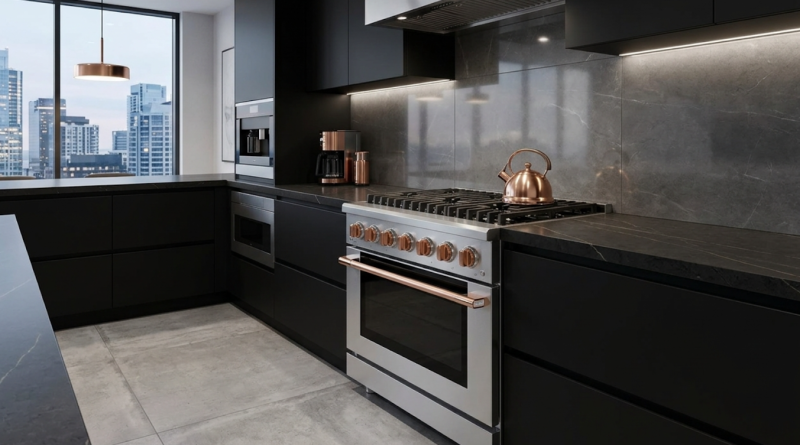
5 Gas Range Questions Clients Ask Builders, With Sourced Answers for 2026
Shopping for gas ranges can be confusing. Homebuilders should familiarize themselves with the most common questions clients ask homebuilders to provide practical advice on features and prices.
| Key Takeaways Match features to the kitchen: Floor plan and cooking habits should drive choices on fuel type, placement, size and oven setup, since extra features usually raise the price. Treat prices as a snapshot: Month-to-month swings and expanded metal tariffs in 2026 can quickly change a quote, so confirming prices near the purchase date may help clients avoid surprises. Look past a single airflow number: Because no universal CFM standard exists, comparing lab CFM equivalents, along with kitchen size, layout and hood type, provides a fuller picture. Read the warranty closely: Coverage that comes with the range differs from extended warranties and service contracts, which are purchased separately, so clients should confirm which one a quote includes. Compare where to buy: Clients can weigh the showrooms and brand variety dealers offer against the lower prices manufacturers often offer, and check who handles service in either case. |
1. What Are the Features of Gas Ranges That Offer the Best Value?
The best gas ranges for the money come down to fuel type, placement, width, oven capacity and oven configuration. Consumer Reports, a nonprofit that advocates for marketplace transparency and fairness for consumers, offers a buying guide that treats these as the starting choices for matching a range to a kitchen’s floor plan and cooking needs.
Clients usually begin by weighing gas against electric or dual-fuel options, which pair gas burners with an electric oven. From there, they compare freestanding and slide-in placement, cavity size and single-oven and double-oven setups, and each choice feeds into the final price.
According to Consumer Reports’ Allen St. John, “Some models tout bells and whistles that can save time and boost convenience. But usually, the more features, the higher the price.” No-frills appliances can offer strong value because they get the job done without optional extras, like variable broil and Wi-Fi connectivity, that drive up the sticker price.
| 💡QUICK ANSWER: What Are the Best Gas Ranges? The best gas range is the one that matches how the kitchen is used. Start with fuel type (gas or dual-fuel), placement (freestanding or slide-in), width, oven size, and single- or double-oven. Extra features like Wi-Fi mostly raise the price. Compare warranty terms and confirm pricing close to purchase. Plan the range hood early, and compare airflow using HVI-certified ratings where available, since manufacturers’ own ratings aren’t always comparable. Example: According to Hauslane’s website, its HausPro ranges come in gas and dual-fuel versions in 30″, 36″ and 48″ widths, each with a 20,000 BTU top burner. Listed oven capacity is 4.2 cu ft on the 30″ model and 5.2 cu ft on the 36″. The 48″ has two ovens (4.2 and 2.5 cu ft). Ranges carry a five-year limited warranty. |
2. What Is a Good Price Range for a High-Quality Gas Range?
Prices for high-quality gas ranges vary widely, in part due to steel and aluminum tariffs, so no single price range suits every client at any given time. Appliance News, an independent news outlet covering the appliance industry, shows that major appliance prices fell 2.4% in March, rose 2.1% in May and declined in both June and July, showing the great variability.
Expanded metal tariffs also began applying to the full customs value of covered appliances on April 6, 2026. Against that backdrop, Appliance News’s Thomas James notes, “The month-to-month figures are volatile enough to make a single reading a poor guide to the underlying direction.” Builders should confirm pricing closer to purchase rather than at the start of a project.
| 💡 IMPORTANT: Homeowners may see retail prices of imported appliances surge due to higher tariffs. |
3. What Range Hood CFM Is Necessary for a Gas Range With High-BTU Burners?
Burner heat output is measured in BTUs, while range hood airflow is commonly expressed as an airflow rating and even as cubic feet per minute or CFM. Hauslane, whose undercabinet hood Popular Mechanics names best overall for gas and electric ranges, says, “You can figure out your CFM requirements in several different ways, considering the size of your range, the size of the room, the layout of your kitchen, and the different types of range hoods you’re considering.”
Airflow ratings can help builders compare hoods, but testing methods differ from lab to lab. “There’s no universal standard for CFM. Different laboratories and testing conditions can yield diverse results. Even minor adjustments, such as changing the ventilation setups or opening windows, can affect CFM readings,” says Hauslane, a member of the National Kitchen & Bath Association.
Because the lack of a general standard can confuse shoppers, some manufacturers offer multiple reference points. For example, Hauslane uses both lab and equivalent airflow ratings. Lab CFM reflects a hood’s maximum airflow capacity in a controlled environment, while equivalent CFM measures performance at the highest fan speed under real-world kitchen conditions.
4. What Is the Warranty and Service Like on Gas Ranges?
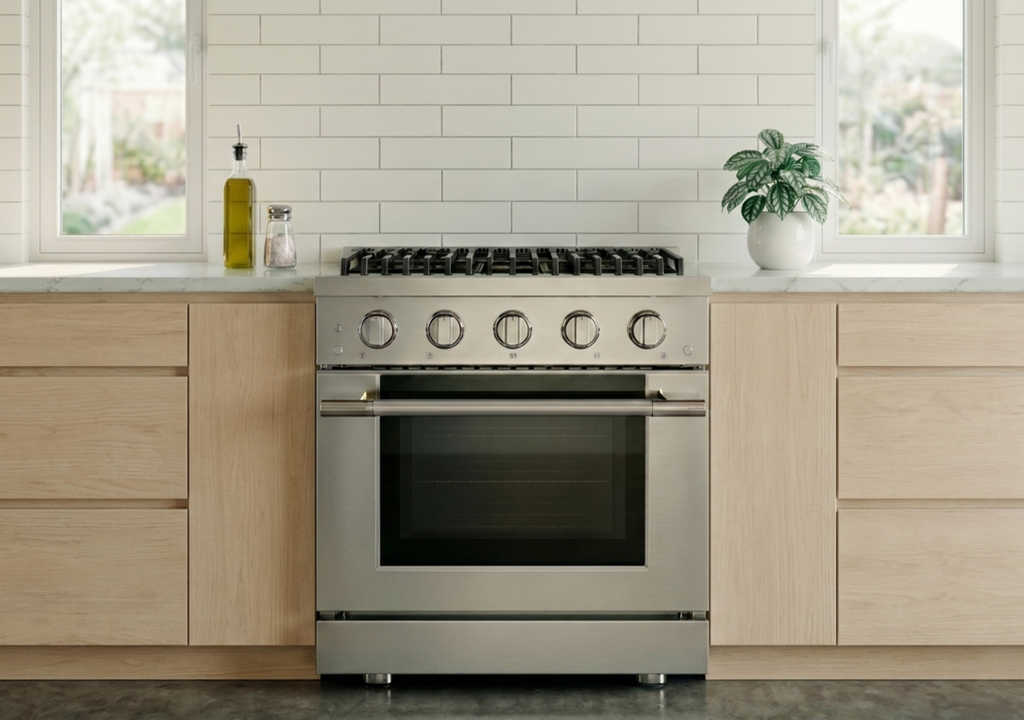
Manufacturers of well-built gas ranges often offer the best warranties because those appliances may cost less to service or replace. According to Hauslane, “The industry standard is two years, but a five-year parts and labor warranty is a manufacturer saying they’re confident their range will last.”
Finding the gas range with the best warranty and service support also means telling the standard warranty, which may automatically come with the product, apart from extended warranties and service contracts, which sellers may offer as separate purchases. Builders who keep the two distinct can help clients compare coverage on equal terms.
| ⚠️ WARNING: Be careful about inadvertently misleading clients by mentioning that only the contents of a written warranty agreement matter, as all American states have laws that create implied warranties or unspoken promises to protect consumers. |
5. Where Should You Buy a Gas Range Online?
Consumers can buy gas ranges online directly from manufacturers or through dealers. Hauslane advises knowing whether your local building code requires a makeup air unit when pairing a gas range with a powerful hood. Check that the online specifications will match your kitchen setup and location-based legal requirements before ordering.
“Some states have building codes requiring you to buy a makeup filter for units that exceed 400 CFM in suction power — unless that unit allows you to limit suction power. Makeup air systems cost $3,000-$8,000 to install professionally,” says the company, which was a top-five range hood brand in Newsweek’s 2023 America’s Best Home and Garden Brands list.
Additional equipment can be expensive. A neat workaround when buying a high-powered range hood is to choose a unit with a feature that limits the blower’s power to under 400 CFM.
Frequently Asked Questions About Gas Ranges
Clients often ask homebuilders similar questions about gas ranges.
What are no-frills gas ranges?
No-frills gas ranges offer only basic yet essential features for cooking and baking. They cost less than models with optional functionalities, such as Wi-Fi connectivity and variable broil, and may offer more value for money.
How long are gas range warranties normally?
By industry standards, gas range warranties are typically two years. Some manufacturers are confident enough to extend coverage for parts and labor to five years.
Are gas ranges expensive?
Gas ranges can be expensive when imported. In the U.S., tariffs on steel and aluminum are likely to cause the retail prices of major appliances manufactured overseas to surge.
Help Clients Choose Their Next Gas Range With Confidence
Builders who can answer these common questions with sources give clients a reason to call them first when a kitchen decision comes up. Keeping up with appliance news, tariff updates and ventilation guidance lets builders offer advice that stays accurate as the market changes.
*Please note that this list includes sponsored content. Some of the companies, products, or services featured have entered into commercial agreements for placement. Sponsored placements do not necessarily reflect an endorsement and should be considered alongside other options in the marketplace.